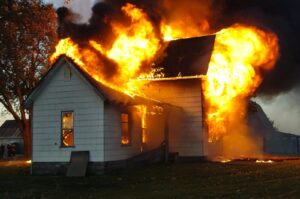

As a small business owner in Manchester, I’ve seen how quickly a minor spark can escalate. Last year, a nearby café suffered an electrical fault that triggered a full evacuation. Thankfully, no one was hurt—but the downtime cost thousands in lost revenue. It was a stark reminder: fire safety isn’t just a compliance exercise; it’s about protecting people, property, and peace of mind.
In 2025, fire risk assessments (FRAs) are more crucial than ever. With the Grenfell Tower Inquiry’s Phase 2 report driving reforms and the Building Safety Act introducing tougher duties, every UK business—from offices and warehouses to retail units—must understand how to stay compliant and safe.
This guide breaks down what FRAs mean for you, what the 2025 regulatory changes involve, and how to conduct a compliant assessment under British Standards—all without drowning in jargon.
What is a Fire Risk Assessment and Why Does It Matter?
A Fire Risk Assessment (FRA) is a structured review of your premises to identify fire hazards, evaluate risk, and implement control measures. It’s the foundation of all UK fire safety legislation.
Under the Regulatory Reform (Fire Safety) Order 2005 (RRO), the “Responsible Person” (employer, landlord, or anyone with control of non-domestic premises) must ensure a suitable and sufficient FRA is carried out and maintained.
Why It Matters
- Prevents injury, loss of life, and costly property damage.
- Proves compliance with the Fire Safety Order 2005 and avoids prosecution.
- Helps insurers assess risk accurately—potentially reducing premiums.
- Creates a safety culture that protects staff and customers alike.
Who Needs a Fire Risk Assessment?
Every non-domestic premises in the UK must have an FRA, including:
- Offices, shops, restaurants, and warehouses
- Industrial sites and factories
- Shared or mixed-use buildings (with residential or commercial units)
- Temporary or community spaces (e.g., pop-up venues, events)
Even small businesses are legally required to assess fire risk. If you employ five or more people, your FRA must be written down—but best practice says always document it, regardless of size.
Exemptions: Only single-family dwellings used purely for domestic purposes. If you run a B&B, Airbnb, or rent rooms, you do fall under the RRO.
The Legal Backbone: 2025 Regulatory Updates
Fire safety law in 2025 has evolved significantly. Key frameworks include:
1. Regulatory Reform (Fire Safety) Order 2005
The central legislation that places legal responsibility on the “Responsible Person” to assess and manage fire risk.
2. Building Safety Act 2022 – Section 156 (Effective Oct 2023)
- Full written FRAs for all premises—no exemptions.
- Clear identification of the competent assessor who carried out the FRA.
- Stronger cooperation between responsible persons (e.g., landlords, tenants).
- Mandatory sharing of relevant fire safety information.
3. Fire Safety (England) Regulations 2022
Implements Grenfell Inquiry recommendations—requiring assessments of external walls, cladding, balconies, and flat entrance doors in multi-occupied buildings.
4. Emerging in 2025
- BS 8674:2025 – new competence framework for assessors.
- BS EN 13501 replacing BS 476 for fire resistance classifications.
- Ban on PFAS-based AFFF extinguishers (by July 2025).
- Mandatory Personal Emergency Evacuation Plans (PEEPs) for vulnerable individuals in high-rises and mixed-use buildings.
Failure to comply can result in unlimited fines or closure notices under the Fire Safety Order.
The 5 Steps to a Compliant Fire Risk Assessment (GOV.UK Framework)
Step 1: Identify Fire Hazards
Look for:
- Ignition sources (faulty wiring, heaters, cooking equipment)
- Fuel sources (paper, chemicals, plastics)
- Oxygen sources (poor ventilation, oxidising agents)
2025 Update: Include lithium-ion batteries, EV chargers, and energy-storage systems—they’re now high-risk ignition points.
Step 2: Identify People at Risk
- Employees, customers, contractors, visitors
- Vulnerable individuals (elderly, disabled, lone or night workers)
Create Personal Emergency Evacuation Plans (PEEPs) for anyone who may struggle to exit independently. From 2025, these are mandatory in multi-occupied and high-risk buildings.
Step 3: Evaluate, Remove, and Reduce Risks
Use a simple matrix—likelihood × consequence—to prioritise hazards. Typical improvements include:
- Installing or upgrading alarms (per BS 5839-1:2017)
- Maintaining emergency lighting (BS 5266-1:2016)
- Ensuring clear escape routes and compliant fire doors (BS 8214)
- Improving ventilation and compartmentation (BS 9999:2017)
Pro tip: Cross-check your building against Approved Document B (2025 amendments) for updated guidance on sprinklers, escape stairs, and fire-resisting structures.
Step 4: Record, Plan, and Train
Legally required from 2023 onwards: all FRAs must be fully written and shared with relevant parties. Include:
- Summary of findings
- Fire-safety policies and emergency plan
- Evacuation maps and assembly points
- Training logs and maintenance schedules
Run regular drills and document outcomes—training is your best defence in audits or investigations.
Step 5: Review and Update
- Annually, or
- After any major change—layout, occupancy, equipment, or refurbishments.
Complex premises (factories, warehouses, care facilities) may need quarterly reviews. Align reviews with BS 9997:2019, which sets out fire-risk management system audits for ongoing compliance.
What’s New for Businesses in 2025?
| Update | Summary | What It Means for You |
|---|---|---|
| Assessor Competence (BS 8674) | Only qualified, accredited professionals can carry out FRAs in complex buildings. | Use BAFE SP205-accredited assessors. |
| Digital Record Keeping | Full electronic FRA records mandatory in multi-occupancy or regulated sectors. | Store safely and share on request. |
| PFAS Foam Ban (July 2025) | AFFF extinguishers with PFAS banned. | Replace with eco-friendly alternatives. |
| BS 476 → BS EN 13501 Transition | New fire classification system. | Update materials and product specs. |
| Expanded Scope | Must include external walls, cladding, balconies. | Review façades and fire spread risk. |
British Standards to Know in 2025
| Standard | Focus | Why It Matters |
|---|---|---|
| BS 9999:2017 | Fire safety design and management for non-residential buildings | Basis for layout, travel distance, and ventilation design |
| BS 9991:2024 | Residential & mixed-use fire safety | Guides multi-occupancy evacuations |
| BS 9997:2019 | Fire-risk management systems | Framework for continuous improvement |
| BS 8674:2025 | Competence of fire-risk assessors | Ensures assessor qualifications |
| BS 5839-1:2017 | Fire-alarm design & maintenance | Essential for detection systems |
| BS 5266-1:2016 | Emergency lighting | Defines lighting levels for escape routes |
| BS EN 13501 | Fire-reaction classification | Replaces BS 476 for material testing |
Common Mistakes Businesses Make (and How to Avoid Them)
- Letting FRAs go out of date – Review annually or after changes.
- Overlooking shared responsibilities – In mixed-use premises, coordinate with landlords and other tenants.
- Neglecting staff training – 70% of fires worsen due to human error; train regularly.
- Ignoring new technologies – Smart alarms and heat sensors can detect risk early.
- DIY assessments for complex buildings – For high-risk or multi-storey sites, always hire a certified assessor.
Industry Snapshots: Tailoring FRAs by Sector
Retail & Hospitality
Crowded spaces need wide, unobstructed exits and maintained kitchen fire suppression. Ensure clear aisle widths (BS 9999 travel-distance guidance).
Offices & Co-Working Spaces
Check overloaded sockets and ageing wiring—hybrid work setups often double plug load. Include staff returning post-remote work in evacuation plans.
Warehouses & Manufacturing
Review storage segregation per BS 9997. Lithium batteries or EV-related equipment require extra controls.
Healthcare & Care-Linked Sites
Comply with 2025 sprinkler provisions and enhanced evacuation support under PEEP regulations.
The Business Benefits of a Strong FRA
- Reduced fire risk — Fewer incidents, less downtime.
- Insurance advantages — Lower premiums for certified compliance.
- Legal confidence — Proof of due diligence under the Fire Safety Order.
- Environmental compliance — Eco-friendly extinguishers and reduced PFAS waste.
- Public trust — Reputation boost for safety-conscious businesses.
Frequently Asked Questions
Q1: Can I carry out an FRA myself?
Yes, but only if you’re competent. Complex sites require a qualified professional per BS 8674:2025.
Q2: How often should I update my FRA?
At least annually—or sooner if major changes occur (renovation, occupancy changes, or incidents).
Q3: What’s the penalty for non-compliance?
Unlimited fines, enforcement notices, or prosecution by the Fire & Rescue Service.
Q4: Do FRAs cover alarms and emergency lighting?
Absolutely—these are integral. Align systems with BS 5839-1 and BS 5266-1.
Q5: What’s replacing BS 476?
BS EN 13501, effective March 2025, becomes the new benchmark for fire-resistance classification.
Final Thoughts: Protect What Matters Most
Fire risk assessments aren’t bureaucracy—they’re your business firewall. In 2025, with tighter laws, new standards, and stricter accountability, ignoring them isn’t an option.
By keeping your FRA up to date, training your team, and working with qualified assessors, you’ll not only meet compliance but also safeguard what matters most—your people, your property, and your peace of mind.
Spycon Security Ltd provides nationwide fire risk assessments, fire safety audits, and compliance solutions, helping UK businesses stay protected 24/7. Get in touch today to schedule your assessment or consultation.