

In London, when landlords, managing agents or business owners ask for a “Fire Safety Certificate”, they are usually referring to a Fire Alarm Installation or Commissioning Certificate.
There is no single government-issued “Fire Safety Certificate” for most existing buildings. Instead, compliance is demonstrated through proper design, installation, testing and certification of fire alarm systems in line with British Standards.
A Fire Alarm Certificate confirms that a system has been:
In London, this documentation is frequently required for HMO licensing, commercial lease agreements, insurance validation and building control approval.
A properly issued Fire Alarm Certificate will identify:
This certificate forms part of the building’s overall fire safety documentation
For houses, flats and HMOs in London, systems are graded under BS 5839-6.
A full fire alarm system with control panel, detectors and sounders.
Typically required in larger HMOs or buildings with complex layouts
Mains-powered, interlinked smoke alarms with battery backup.
Common in smaller residential properties.
London borough councils frequently specify Grade A systems in licensed HMOs where risk profile is higher.
We provide:
Across all London boroughs including Camden, Islington, Hackney, Southwark, Croydon, Brent, Westminster and surrounding areas.
Contact us today to book a Fire Alarm Certificate tailored to operational and compliance requirements.
A properly issued Fire Alarm Certificate will identify:
This certificate forms part of the building’s overall fire safety documentation.

Correct sound pressure levels are essential for life safety.
Under BS 5839 guidance:
Sound testing is conducted during commissioning, and results are recorded in the certificate.
Insufficient sound levels are one of the most common compliance failures.
Alarm system design supports safe evacuation.
While travel distances are defined in Approved Document B of the Building Regulations, fire alarm category selection is influenced by:
In larger London commercial buildings, earlier detection (L1 or L2 systems) may be required to compensate for extended travel routes.
Fire alarm systems must also comply with:
BS 7671 – IET Wiring Regulations (18th Edition, including Amendment updates).
This ensures:
Competence in installation is often demonstrated through recognised bodies such as:
While not mandatory by law, third-party scheme membership supports evidence of compliance and professional standards
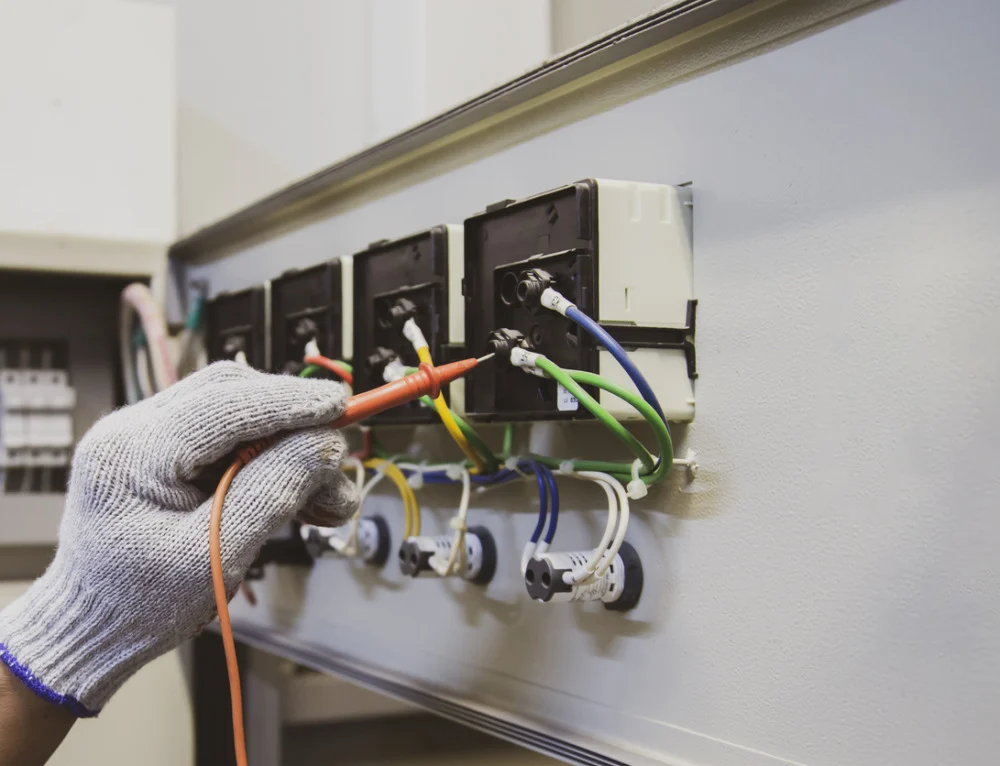
In commercial properties across London — such as offices, retail units, warehouses and mixed-use buildings — alarm systems are classified into categories based on the level of protection required.
Automatic detection installed throughout the entire building.
Detection in escape routes and high-risk areas.
Detection in escape routes and rooms opening onto escape routes.
Detection in escape routes only.
Detection in specific risk areas only.
The correct category depends on building layout, travel distance and occupancy profile.
Increased scrutiny following regulatory reforms means:
The London Fire Brigade does not issue certificates. Responsibility remains with the building’s Responsible Person.
Proper documentation protects landlords, directors and managing agents from enforcement exposure.

Property protection systems are commonly required by insurers.
P1 – Maximum Property Protection
Detection installed throughout the building to reduce damage and business interruption.
P2 – Minimum Property Protection
Detection installed in defined high-risk areas only.
In London commercial premises, P1 systems are often required in larger buildings or where business continuity is critical.
A landlord applied for licence renewal. Existing Grade D alarms were insufficient for occupancy level and building layout.
System upgraded to Grade A, sound levels tested to achieve 75 dB in bedrooms, and full commissioning certificate issued.
Licence approval granted following submission.
Insurer required P1 system confirmation. Existing L3 system extended to provide full property protection coverage.
Certification updated to reflect P1 compliance.
Don’t wait until it’s too late. Ensure your property is protected and compliant with a professionally installed fire alarm system.
It is required to demonstrate compliance following installation or modification of a system under BS 5839 standards.
L1 protects life throughout the building. P1 protects property throughout the building.
Grade A includes a control panel system. Grade D uses interlinked mains-powered alarms without central panel.
65 dB in general areas and 75 dB at the bedhead in sleeping areas.
Often yes, depending on building size and risk assessment outcome.
Detection installed in defined high-risk areas only.
It supports proof of competence and compliance with wiring regulations
No. Certification is issued by competent installers.