

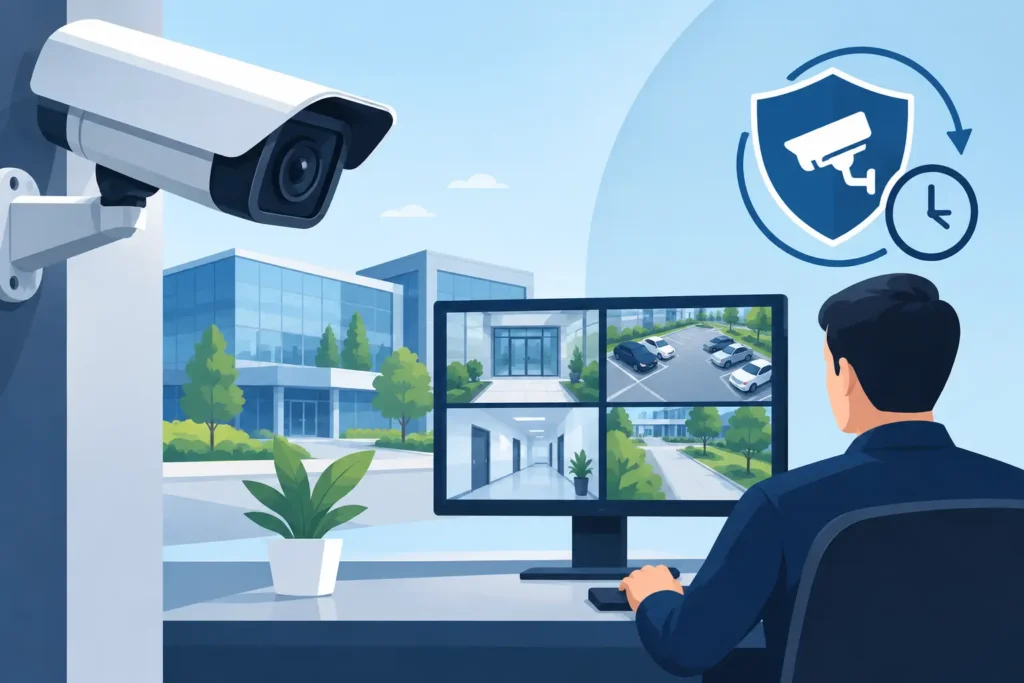
A loading bay door forced open at 2:15 a.m. is not a problem for the morning shift to discover. It is an active incident that needs assessment, escalation, and a proportionate response. CCTV monitoring services turn camera footage into that operational capability, providing trained oversight when a site is unoccupied, lightly staffed, or exposed to elevated risk.
For facilities managers, property operators, construction leads, and estate teams, the value is not simply having more cameras. It is knowing that a potential intrusion, safety issue, or unauthorized access event is identified quickly and handled through an agreed process. That process must stand up to scrutiny from insurers, tenants, senior management, and, where necessary, the emergency services.
CCTV Monitoring Services Are More Than Recorded Footage
A camera that records an incident may help establish what happened afterward. A monitored system can help influence what happens next. When alerts are received in a control room, trained operators can assess live and recorded images, distinguish credible threats from routine activity, and follow the agreed response plan.
This distinction matters on sites where delays create cost or exposure. A trespasser may be attempting theft. A vehicle may have entered a restricted area. A fire exit may be obstructed, or an access point left open after hours. In each case, a passive system provides evidence later. Active monitoring creates an opportunity to intervene while the situation is still developing.
The right response depends on the site and the event. A verbal warning through an audio system may be appropriate for low-level trespass. A request for mobile patrol attendance, keyholder escalation, or police contact may be necessary where there is verified criminal activity or immediate risk. The purpose is not to send the same response to every alert. It is to ensure that each response is timely, documented, and proportionate.
Where Continuous Monitoring Delivers the Greatest Value
Round-the-clock coverage is particularly valuable where premises have long periods without a physical security presence. Construction sites can hold high-value plant, tools, fuel, and materials, often behind changing perimeter arrangements. Vacant properties are vulnerable to intrusion, vandalism, illegal occupation, and damage that can compromise insurance conditions.
Industrial premises, logistics yards, commercial offices, residential blocks, and critical infrastructure each present different challenges. A logistics operation may need oversight of gates, vehicle movements, and loading areas. A residential block may prioritize unauthorized entry, communal-area incidents, and controlled access. An office site may require protection of sensitive areas without creating unnecessary disruption for employees and approved visitors.
CCTV monitoring is also useful where manned guarding is needed at specific times rather than throughout every hour. Remote oversight can complement patrols, gatehouse staff, or keyholding arrangements, helping operators direct physical resources to verified events. This can be more cost-effective than maintaining a permanent guard presence in every location, but it should never be treated as a substitute for guards where a site requires immediate on-site control.
Risk Assessment Should Set the Coverage Plan
Camera placement, monitoring hours, escalation routes, and retention requirements should follow a clear assessment of risk. A system designed around convenience rather than operational need often leaves critical gaps: an unobserved rear entrance, poor coverage of a fuel store, or a blind spot at a pedestrian gate.
Start with what must be protected, when it is most exposed, and how an incident would affect people, operations, compliance, and reputation. Then consider the site environment. Lighting, weather, vehicle traffic, changing construction layouts, and public access all affect how cameras perform and how operators interpret alerts.
It is equally important to identify what the control room can and cannot do. Remote monitoring can verify activity, issue warnings, notify nominated contacts, and coordinate agreed escalation. It cannot physically detain an intruder, repair a damaged gate, or replace a required on-site safety presence. Clear expectations prevent security plans from relying on capabilities that are not available when pressure rises.
What a Defensible Response Process Looks Like
Effective monitoring relies on an agreed set of instructions, not improvised decisions. The operating plan should define the protected areas, camera priorities, alert thresholds, approved contacts, and escalation sequence. It should also account for out-of-hours operations, contractor access, deliveries, and exceptional events.
A practical response process commonly includes these four stages:
- An alert is received and assessed against live images and available site information.
- The operator verifies whether the event is a genuine security, safety, or access concern.
- The agreed response is activated, which may include audio challenge, keyholder contact, patrol attendance, or emergency escalation.
- The incident is recorded with relevant times, actions, observations, and outcomes for follow-up.
Documentation is not an administrative extra. It gives managers a reliable account of what was observed and what was done. That can support internal reviews, claims handling, tenant communication, disciplinary procedures, and evidence preservation following a serious event.
False alarms deserve attention as well. Repeated unwanted alerts can undermine confidence and waste response resources. They may result from poorly positioned cameras, environmental movement, inadequate detection settings, or normal site activity not reflected in operating instructions. A disciplined provider reviews patterns, adjusts the configuration where appropriate, and keeps the response plan aligned with real site conditions.
Compliance, Privacy, and Evidence Must Be Planned Together
CCTV can support duty of care, access control, loss prevention, and incident investigation, but it must be managed responsibly. Property operators should consider data protection obligations, appropriate signage, access controls, retention periods, and procedures for handling footage requests. The requirements will vary by use case, occupancy, and jurisdiction, so policies should be specific to the organization rather than copied from a generic template.
Operationally, the quality of recorded evidence matters. Images should be usable, times synchronized, and cameras maintained so that key areas remain visible in low light and changing weather conditions. A camera overlooking a gate is of limited value if glare prevents identification at the point of entry, or if the view is routinely blocked by parked vehicles.
Managers should also establish who can request footage, who approves release, and how incidents are retained. This protects privacy while ensuring that evidence is available when it is genuinely needed. Security, facilities, legal, and compliance teams should be working from the same documented process.
Integration Reduces Gaps Between Detection and Action
The strongest arrangements connect CCTV monitoring with the wider security plan. Cameras can support access control investigations, direct mobile response teams, verify alarm activations, and provide visibility for site managers during critical incidents. Where fire and life-safety responsibilities are also managed through a coordinated provider, escalation routes can be clearer across the full risk picture.
For example, a monitored image may help confirm whether an alarm activation requires urgent attendance, whether an evacuation route is obstructed, or whether a contractor has entered a restricted area. The camera does not replace fire detection, trained marshals, or formal emergency procedures. It strengthens situational awareness and helps responsible people make informed decisions faster.
This is where a single accountable provider can make a practical difference. Spycon Security Ltd. coordinates monitoring, guarding, site protection, and fire-safety support so that operational controls are not managed as disconnected services. The result should be one clear chain of responsibility, with records and response arrangements that are easier to test and improve.
Questions to Ask Before Appointing a Provider
A monitoring proposal should explain more than the number of cameras and monthly cost. Ask how alerts are verified, what hours are covered, who is authorized to make decisions, and how the provider communicates during an active incident. Confirm the process for testing cameras, reporting faults, reviewing false alarms, and updating instructions when the site changes.
You should also ask what reporting is provided. A useful report identifies patterns, not just isolated events. Repeated after-hours access attempts, recurring perimeter breaches, or persistent alarm activations may point to a physical weakness, a procedural failure, or the need for additional on-site measures.
Finally, make sure escalation contacts are current and reachable. An excellent control room cannot deliver a complete response if the keyholder list is outdated or no one has authority to approve attendance. Review contacts and instructions routinely, especially after changes in management, occupancy, construction phases, or operating hours.
The right monitoring service gives your team more than visibility after dark. It creates a tested chain from detection to response, backed by people who know the site, follow the plan, and keep a record when every decision may later be questioned.