


An empty building in London is not merely a space awaiting a tenant; it is a high-stakes liability that demands absolute vigilance. Effective vacant property security London is now a necessity to counter the rising threats of arson, metal theft, and professional squatting. You understand that a single breach can lead to months of legal conflict or an insurance claim rejected due to fire safety negligence. It is a burden no property owner should carry without professional support.
Securing your investment requires a disciplined framework that combines elite manned guarding with rigorous fire safety protocols. This guide explains how to integrate these services to eliminate vulnerabilities and maintain full regulatory compliance. You will learn the specific strategies needed to protect your assets 24/7 whilst ensuring the site remains in peak condition. We provide a clear roadmap to ensuring your property is secure, compliant, and ready for immediate sale or re-letting.
Key Takeaways
- Identify the sophisticated threats facing empty assets in 2026, from professional squatter networks to heightened fire risks.
- Discover why a physical presence remains the primary deterrent within a robust vacant property security London strategy.
- Learn to maintain insurance and regulatory compliance through integrated fire risk assessments and fire door surveys.
- Master the “day zero” audit process to eliminate vulnerabilities whilst ensuring necessary emergency services access.
- Understand the operational advantages of deploying SIA-licensed guards and NASDU-trained canine units for high-risk sites.
The Growing Risks for London’s Vacant Properties in 2026
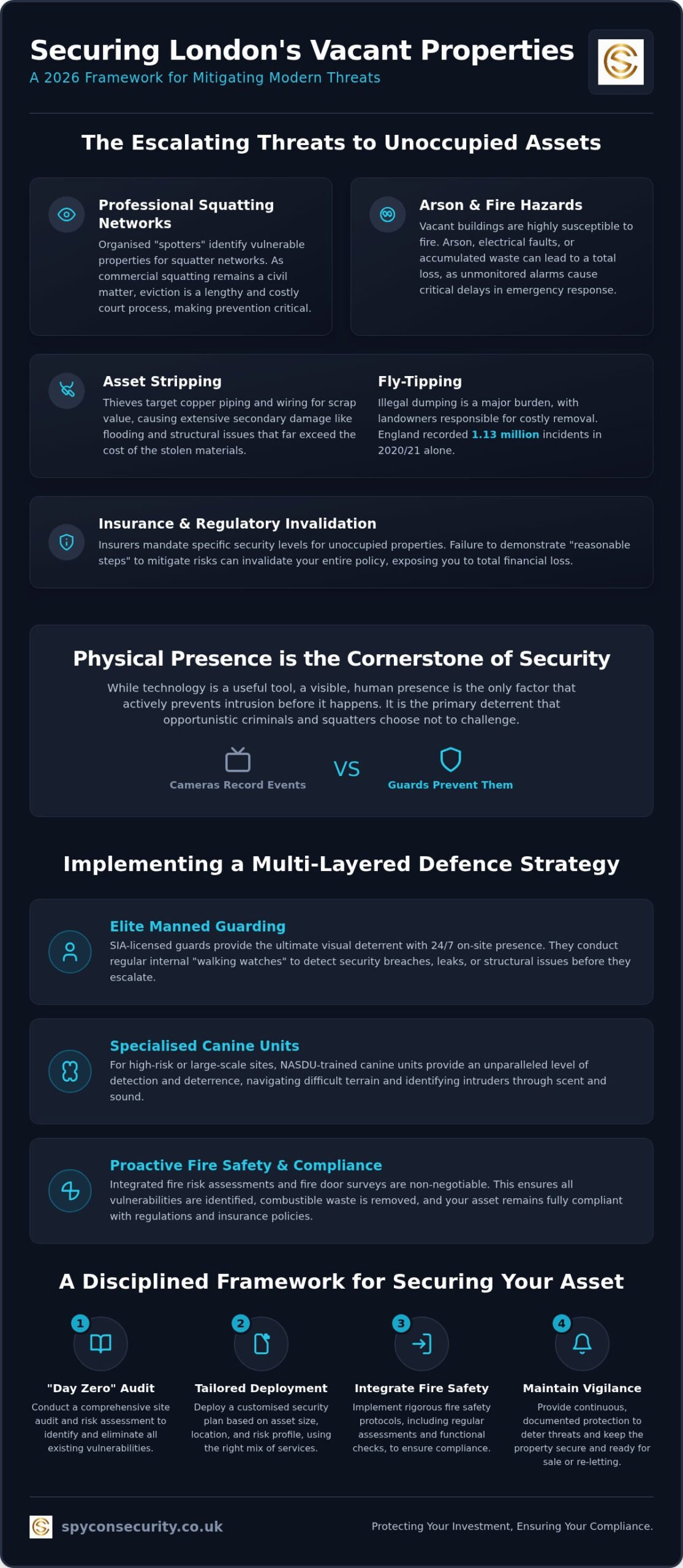
London’s property market in 2026 faces sophisticated threats that traditional boarding cannot solve. Professional “spotters” now actively monitor high-density commercial zones. These individuals identify vulnerabilities, such as uncollected mail or a lack of patrol presence, and sell this data to squatter networks. Effective vacant property security London must account for this organised approach to intrusion. A building that appears neglected becomes an immediate target for groups looking to exploit legal loopholes.
Empty buildings also attract secondary crimes that can be equally damaging. Fly-tipping incidents remain a significant burden; landowners are typically responsible for the cost of removing the waste. In the 2020/21 period alone, England saw 1.13 million recorded fly-tipping incidents. Asset stripping is another destructive trend. Thieves target internal copper piping and wiring for their scrap value. This often results in extensive secondary damage, such as flooding or structural instability, which far exceeds the value of the stolen materials.
Insurers have responded to these rising threats by mandating specific security levels for any building with “unoccupied” status. Failure to demonstrate that you have taken “reasonable steps” to mitigate risk can invalidate a policy entirely. This makes professional verification and vacant property security London protocols essential for any unoccupied site. You must be able to prove that the property is being actively managed and protected to maintain your coverage.
Squatting and Unauthorised Occupation in the City
The legal landscape for owners of commercial stock is particularly challenging. Squatting in a commercial property remains a civil matter in 2026. This forces owners into lengthy and expensive court processes to secure an eviction. Understanding the risks of squatting is the first step toward prevention. A rapid physical response is the only reliable way to stop an initial entry from becoming a permanent occupation. Professional guarding ensures that “adverse possession” claims never gain traction by maintaining a documented, continuous presence on-site.
The Overlooked Danger: Arson and Fire Risks
Vacant buildings are statistically more vulnerable to fire damage. Without occupants, a small electrical fault or an act of arson can escalate into a total loss before emergency services are alerted. Disconnected or unmonitored systems significantly slow detection speeds. Regular fire risk assessments are critical to identifying these vulnerabilities. These audits ensure that fire doors remain functional and that combustible waste is removed before it becomes a fuel source. Maintaining fire safety compliance is not just a legal duty; it is a fundamental pillar of asset protection.
Implementing a Robust Physical Security Strategy
Physical presence is the cornerstone of effective vacant property security London. While cameras record events, they cannot intervene. A visible, human presence stops a crime before it begins. Intruders actively seek the path of least resistance. High-visibility uniforms and marked patrol vehicles signal that an asset is under active defence. According to the latest crime statistics, property-related offences remain a persistent challenge in urban centres. Professional guarding creates a psychological barrier that opportunistic vandals and squatters rarely choose to challenge.
Every asset requires a tailored approach. A small office in Mayfair demands a different protocol than a sprawling industrial redevelopment in Barking. We customise security levels based on building size and neighbourhood risk profiles. This ensures resources are deployed where they are most effective. True protection comes from integrating manned guarding with technical surveillance. This creates a redundant system where technology provides the data and guards provide the response. For those managing high-value assets, professional guarding solutions provide the necessary layer of elite protection.
Manned Guarding: The Ultimate Visual Deterrent
A 24/7 on-site presence offers the highest level of protection available. While mobile patrols are cost-effective for lower-risk sites, they leave gaps in time that sophisticated intruders can exploit. Our SIA licensed guards provide more than just a deterrent. They conduct regular “walking watches” throughout the building. These internal patrols identify early signs of structural issues, such as pipe leaks or broken seals, before they escalate into costly repairs. Each patrol is documented, providing the rigorous verification your insurance provider requires for unoccupied status.
Canine Security Units for Large London Sites
Large London sites, such as warehouses or construction plots, present unique tactical challenges. These environments are often vast, dark, and filled with blind spots. NASDU trained canine units offer superior detection capabilities in these settings. A dog’s sense of smell and hearing can identify an intruder long before they appear on a thermal camera. In many cases, a single dog handler is more effective than three standard guards. The psychological impact of a security dog is unparalleled. It is the most efficient way to secure a large perimeter whilst maintaining strict legal compliance and safety standards.
Technology and Fire Safety: Beyond Simple Surveillance
Technology serves as the eyes of a building, but eyes without hands are ineffective. For vacant property security London, a digital-only approach is a high-stakes gamble. Passive recording might document a crime, but it does nothing to prevent one. London insurers increasingly demand professional risk management strategies that include active remote monitoring. This ensures that any technical alert triggers an immediate, disciplined intervention by a physical response team. Without this link, your surveillance system is merely a forensic tool rather than a preventative shield.
Fire safety is often the first protocol neglected once tenants depart. This is a critical error. Empty buildings require constant vigilance to prevent total asset loss from arson or electrical faults. Professional fire alarm installation tailored for vacant settings provides the necessary early warning system. These installations must remain operational and verified through regular testing. Neglecting this duty risks both the physical asset and the validity of your insurance coverage. Maintaining fire safety equipment is a non-negotiable requirement for professional site management.
24/7 CCTV Monitoring vs. Security Patrols
Passive surveillance creates a false sense of security. A recorded video of a break-in is cold comfort after the damage is done. Remote monitoring centres bridge this gap by alerting London-based response teams in seconds. This speed is vital for vacant property security London. While technology offers constant observation, it lacks the ability to secure a breached entry point or detain an intruder. By combining technical layers with physical patrols, you create a comprehensive defence. The investment in an integrated response team is significantly lower than the potential cost of arson or structural vandalism.
Fire Risk Assessments for Empty Buildings
A fire risk assessment must be updated the moment a building becomes vacant. The risk profile shifts significantly when a site is unoccupied. Piles of mail, unmaintained vegetation, or faulty wiring become primary hazards. We check fire door integrity to prevent “chimney effects” that accelerate fire spread through empty corridors. Securing a fire strategy report ensures your asset meets modern safety standards. This level of meticulousness is what separates professional protection from basic caretakers who lack specialist fire safety training.
A Step-by-Step Guide to Securing Your Vacant Asset
The first 24 hours of a building’s vacancy are the most critical. You must act with operational precision to mitigate immediate risks. A “day zero” audit is the foundation of effective vacant property security London. This assessment must cover both physical entry points and fire vulnerabilities. It’s also the moment to address your legal obligations under the Occupiers’ Liability Act. You owe a duty of care to anyone on your site, even trespassers. Eliminating hazards like exposed wiring or structural weaknesses is a legal necessity to prevent costly litigation.
Establishing a community watch effect is equally vital. Notify local authorities and neighbouring businesses of the property’s status. Provide them with emergency contact details for your security team. This ensures that any suspicious behaviour is reported and met with a rapid, professional response. A documented schedule for patrols and maintenance must follow this initial hardening phase. Order and visibility are your strongest allies in preventing unauthorised occupation.
Immediate Site Hardening and Hoarding
Securing the perimeter requires a choice between steel sheeting and professional site hoarding. For London shopfronts, steel offers a formidable physical barrier against forced entry. Hoarding may be preferred for redevelopment projects where aesthetics and branding are priorities. You must also secure letterboxes to prevent arson via “postal” entry points. Removing all internal waste and combustible materials is essential. This reduces the fire load and removes the fuel that intruders might use to start a deliberate blaze. A cleared site is a less attractive target for those seeking to cause damage.
Ongoing Maintenance and Security Audits
Kerb appeal is a powerful deterrent. A clean exterior suggests active management and discourages opportunists. Conversely, graffiti and accumulated litter signal neglect. You must document every inspection meticulously to maintain insurance validity. Insurers require proof that you’re following “reasonable steps” to protect the asset. This includes testing temporary fire alarm systems and emergency lighting regularly. Consistent audits ensure that your security strategy remains robust and compliant over time. For a professional assessment of your site’s vulnerabilities, secure a comprehensive fire and security audit today to ensure total asset protection.
Why Spycon Security is the Trusted Choice for London Property Managers
Spycon Security Ltd. operates with a singular focus on the disciplined protection of your assets. We understand the specific crime trends affecting the capital’s boroughs. Our team integrates walking watch fire marshals into standard security rotations to provide a dual-layered defence. This ensures that vacant property security London addresses both the threat of intrusion and the risk of environmental disaster. We provide an elite, all-in-one solution for landlords who require unwavering reliability and professional gravity.
Professional Standards and Meticulous Readiness
Our guards are not merely observers; they are highly trained specialists. Every member of our team is SIA licensed and undergoes rigorous training in both physical intervention and fire safety protocols. We understand the nuances of London Building Control requirements. This expertise ensures your site remains compliant with the latest 2026 regulations. We maintain constant readiness for emergency deployments across the capital. Our presence is steady, grounded, and designed to instill immediate confidence in our clients. We do not allow for shortcuts in asset protection.
Bespoke Protection Plans for Commercial and Residential Sites
We provide protection that scales to the specific value and risk profile of your asset. Our bespoke plans cover everything from small residential units to massive industrial estates. We tailor every strategy to ensure maximum efficiency without compromising on safety. We use NASDU trained canine units for high-risk or large-scale London sites where detection is paramount. Transparency is a core pillar of our service. We use digital logs and real-time reporting to provide you with total visibility. You receive documented proof of every patrol and audit. Contact our London centre today to organise a comprehensive site survey and ensure your property is protected by the city’s elite security partners.
Secure Your Asset With Professional Precision
London’s property landscape in 2026 leaves no room for security gaps or regulatory oversights. Protecting an unoccupied building requires more than just locking the doors; it demands a disciplined, integrated strategy that addresses both human intrusion and environmental hazards. You’ve seen how professional vacant property security London relies on the synergy between elite manned guarding and rigorous fire safety compliance. By establishing a robust “day zero” protocol and maintaining documented readiness, you satisfy insurers whilst eliminating the vulnerabilities that attract squatters and vandals.
Our team provides the vigilant protection your investment deserves. We deploy SIA Licensed Professionals and NASDU Trained Canine Units to ensure your site is never an easy target. As Fire Safety Compliance Experts, we ensure your building remains a viable, secure asset ready for its next phase. Don’t leave your property’s future to chance.
Secure your vacant London asset with Spycon Security today. We are ready to stand as your watchful guardian.
Frequently Asked Questions
Is it a legal requirement to have security for a vacant property in London?
No specific statute mandates security, but the Occupiers’ Liability Act 1984 creates a clear duty of care for property owners. You are legally responsible for the safety of anyone on your site, including trespassers. Implementing vacant property security London ensures you mitigate these liabilities whilst preventing the unauthorised occupation that leads to costly legal battles.
How much does vacant property security cost in London?
The cost of protection depends entirely on the size of the asset, its location, and the specific risk profile identified. We provide bespoke protection plans tailored to your security budget and the value of the property. Professional guarding is a strategic investment that prevents the far greater costs associated with arson, asset stripping, or squatter eviction.
Can security guards also act as fire marshals for empty buildings?
Yes, our SIA-licensed guards are trained to perform walking watch fire marshal duties as part of their standard rotation. This integrated approach ensures your building is protected from both human intruders and environmental hazards. We maintain a constant state of readiness to identify and neutralise fire risks before they escalate into a total asset loss.
What is the difference between property guardians and professional security guards?
Professional security guards are elite, SIA-licensed specialists trained in physical intervention, fire safety, and site hardening. Property guardians are typically individuals who live in the building to provide a basic presence but lack the training or authority to handle serious breaches. For high-value London assets, a disciplined professional presence is the only reliable way to ensure total compliance.
How does vacant property security affect my insurance premiums?
Robust security measures are typically a mandatory condition for maintaining valid insurance on an unoccupied building. Insurers require documented proof that you are taking “reasonable steps” to protect the asset from risks like arson and theft. Failure to implement professional vacant property security London protocols could lead to a claim being rejected or your policy being invalidated entirely.
Can you provide canine units for short-term vacant property protection?
Yes, our NASDU trained canine units are available for immediate deployment on both short-term and long-term assignments. They are an exceptionally effective deterrent for large warehouses or construction sites during high-risk transitions. A single dog handler provides superior detection capabilities in dark or complex environments where standard surveillance might have blind spots.
What happens if squatters have already entered my London property?
Squatting in a commercial building remains a civil matter that requires a court order for a legal eviction. Once the intruders are removed, you must immediately harden the perimeter to prevent a repeat offence. We provide rapid deployment of manned guarding to secure the site the moment it is recovered, ensuring your asset remains vacant and protected.
How quickly can Spycon Security deploy guards to a site in London?
We maintain a state of constant operational readiness to protect assets across the capital. Our 24/7 monitoring and management capabilities allow us to deploy SIA-licensed professionals to your site with minimal notice. We understand that security gaps are time-sensitive emergencies and we act with the necessary precision to secure your property before vulnerabilities are exploited.