

Basic Insulation + Protective Earthing
Protection
Uses basic insulation with protective earthing to prevent shock hazards in case of fault.
Typical Examples
- Many kettles
- Washing machines
- Metal-cased appliances
PAT Testing London From £55 Professional Portable Appliance Testing for Landlords, HMOs & Businesses.
Need a PAT test in London without complicated pricing or unnecessary paperwork? At Spycon Security, we provide practical Portable Appliance Testing (PAT) for landlords, HMO properties, offices, shops, schools, hospitality businesses, construction sites and other
workplaces. Our prices start at £55 for up to 10 appliances, with additional appliances charged at £2.50 each. We inspect the equipment, carry out appropriate electrical tests,
record the results and provide clear digital documentation for your records. Whether you have 5 appliances in a rental property or a larger inventory across a commercial premises, we can help you keep your electrical equipment properly inspected and documented.
The starting fee remains £55 plus VAT for up to 10 appliances, with additional appliances at £2.50 each plus VAT. For 25 appliances the charge is £92.50 plus VAT. We confirm how detachable leads and separately assessed items are counted, together with the estimated inventory and any agreed parking, Congestion Charge, ULEZ or other access costs. For larger inventories or multiple sites, request a tailored quotation.
Insurance is arranged through NAPIT, subject to the relevant
policy terms, insured activities and limits.
This does not turn a PAT report into a NAPIT scheme certificate.
Your digital appliance register identifies the inspected
equipment, location or asset reference, date and relevant results.
Agreed labels connect appliances to the register; the recorded
findings remain the important evidence.
Appliances Price
Up to 10 £55
20 £80
30 £105
50 £155
100 £280
Additional appliances: £2.50 each.
For example, 25 appliances would be:
£55 + 15 × £2.50 = £92.50
So the total would be £92.50.
Prices are subject to VAT. Any unavoidable parking, Congestion Charge, ULEZ or other site-access costs will be discussed and
agreed before the appointment. Need PAT testing for more than 100 appliances or across several properties? Contact us for a tailored quotation.
Our team includes AM2-qualified electrical engineers or supervisors. PAT work is undertaken by personnel competent in the equipment construction and test methods used. AM2 is relevant electrical background, not a separate PAT licence. The tester records the findings, and the competent person responsible reviews and signs the report where applicable. Relevant equipment types, tests and limitations are identified rather than hidden behind a generic pass label.
Send us the property address, building type and any information you have about the existing fire alarm system. We can then discuss the appropriate inspection, testing or servicing
requirement.
Call 020 4600 4703
Tell us about servers, refrigeration, tills, medical devices and equipment that cannot be disconnected without a plan. We agree safe shutdown and access arrangements with the responsible contact. Sensitive electronics require an appropriate method. Specialist medical equipment or equipment governed by a separate maintenance regime may need a different service and should be identified before the visit.
We notify the responsible contact of unsafe equipment and
record the finding. Failed equipment should remain out of use until suitably repaired and reassessed or replaced. Repairs and retesting are separately agreed. Items that are inaccessible, unavailable or outside scope are recorded as such; they are not included as satisfactory test results.
Inspection and testing intervals should reflect equipment use, environment, condition and previous findings. National requirements do not impose annual PAT testing for every appliance, but an HMO licence, insurer, client or venue may set specific conditions. Supply those conditions before booking. PAT testing does not replace an EICR, fire alarm servicing or emergency lighting testing.
Care homes and other care settings have additional responsibilities around the safety and maintenance of equipment used by staff and residents. Electrical equipment may also be used in environments where residents are particularly vulnerable, meaning equipment condition and maintenance need to be taken seriously. The appropriate inspection and testing frequency should be based on the equipment, its environment and the organisation’s wider risk-management arrangements, together with any applicable regulatory or contractual requirements. If your care setting has a specific maintenance schedule or
inspection requirement, we can work to that agreed programme.
PAT stands for Portable Appliance Testing. It is the inspection and, where appropriate, electrical testing of portable and movable electrical equipment to help establish
whether it is safe to continue using. PAT testing is not simply a case of plugging an appliance into a tester and putting a sticker on it. A proper inspection starts by looking at the equipment itself and considering how it is being used. We may check things such as:
• The plug and fuse
• Cable and flex
• Appliance casing
• Signs of damage or overheating
• Loose or exposed parts
• Signs of wear and misuse
• Suitability for the environment
• Protective earthing where applicable
• Insulation where applicable
• Other appropriate electrical safety measurements
The tests carried out depend on the appliance and its construction. Not every item needs exactly the same test.
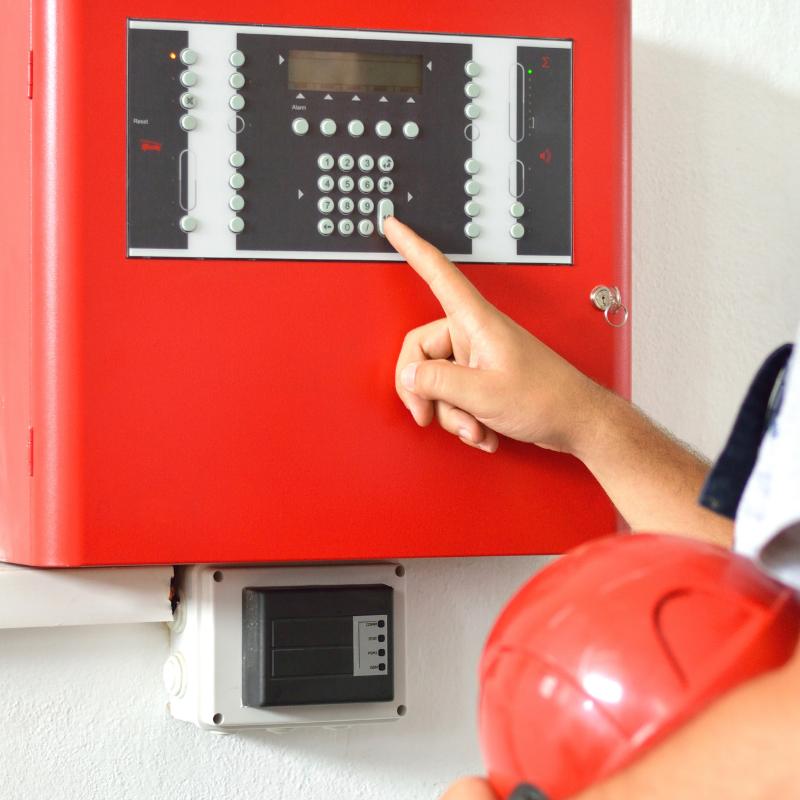
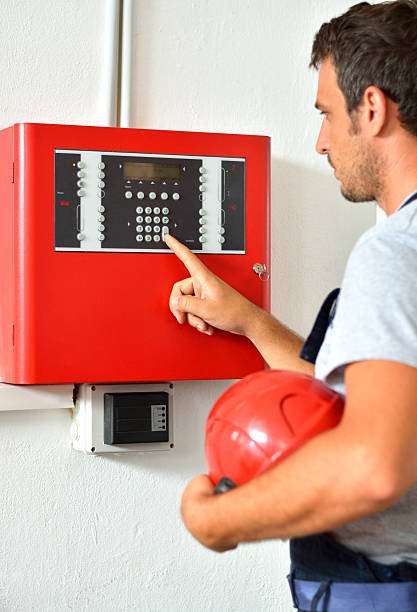
The phrase fire alarm certificate can mean different things depending on the work being carried out. For an existing fire alarm system, the certificate may relate to an inspection and servicing visit. Other certificates can relate to different stages of the system,
including:
• Design
• Installation
• Commissioning
• Acceptance
• Verification
• Modification
• Inspection and servicing
These documents are not interchangeable. For example, a Fire Alarm Installation Certificate records
installation work. A Fire Alarm Commissioning
Certificaterecords commissioning of a completed system. An Inspection and Servicing Certificate records the testing and
servicing of an existing system. That distinction is important when a landlord, property manager, insurer, licensing authority or other interested party asks for a
“fire alarm certificate”. We document the work that has actually been carried out rather than issuing a generic certificate that claims more than the inspection can establish.
A fire alarm panel showing “normal” does not, by itself, mean the whole system has been properly tested. Depending on the system and the agreed scope, our fire alarm
testing can include:
Control Panel
Checking the control and indicating equipment, indicators, faults and relevant functions.
Smoke and Heat Detectors
Testing relevant automatic detectors and checking their condition.
Manual Call Points
Testing manual activation points and checking for visible damage or obstruction.
Sounders
Checking audible alarm devices within the agreed testing arrangements.
Visual Alarm Devices
Testing visual alarm indicators where these are installed.
Batteries and Power Supply
Checking mains supply arrangements and standby batteries where accessible and applicable.
Faults and Indications
Reviewing fault indications and issues identified during testing.
Interfaces
Checking relevant interfaces where these form part of the system and are included within the inspection scope.
Fire Alarm Logbook
Reviewing available records, previous service entries and relevant system information.
The exact scope always depends on the system, premises,
documentation, accessibility and the work agreed.
This is one of the areas where PAT testing is often explained
incorrectly. There is no blanket UK law requiring every portable electrical appliance to be PAT tested every year. The Electricity at Work Regulations 1989 require electrical equipment used at work to be maintained, so far as reasonably practicable, so that it does not present a danger. The regulations do not prescribe a universal annual PAT testing interval. Instead, the inspection and testing programme should reflect the level of risk. That means an appliance used occasionally in a low-risk office environment may not need the same testing frequency as a portable power tool being used every day on a construction site. The IET Code of Practice for In-service Inspection and Testing of Electrical Equipment, 5th Edition provides guidance for
deciding how electrical equipment should be inspected and tested, taking account of factors such as the equipment, environment and how it is used.
This is where things can become more complicated. Although national electrical safety legislation does not create a universal annual PAT rule, HMO licensing conditions can impose additional requirements. London HMOs are licensed by the relevant local authority, and licensing conditions can vary between councils and property circumstances. If your HMO licence requires periodic inspection or testing of supplied electrical appliances, you need to follow that specific condition. So rather than saying that “the law requires annual PAT testing for every HMO”, the safer and more accurate approach is:
Check the conditions attached to your particular HMO licence.
We can help you keep the PAT records organised so you have
clear documentation for your property files.
False alarms deserve more attention than they sometimes receive. Repeated unwanted fire alarm signals can disrupt a building and reduce confidence in the alarm. Reviewing false alarms and their causes is therefore an important part of managing an existing system. Repeated unwanted alarms can make people less likely to react quickly when a genuine fire occurs. LFB recommends investigating the reason for false alarms and taking steps to reduce repeat occurrences. Possible causes include cooking, steam, aerosols, smoking, hot works, environmental conditions, human error and maintenance issues. A good servicing programme should therefore look not only at whether the alarm operates, but also whether the system is being affected by recurring unwanted alarms.
Retail premises use electrical equipment throughout the day. We can inspect suitable equipment such as:
• Till and POS equipment
• Computers
• Printers
• Display equipment
• Chargers
• Extension leads
• Kitchen appliances
• Cleaning equipment
• Portable electrical tools
If equipment is frequently moved, plugged in and unplugged or exposed to damage, its inspection requirements may differ from equipment that remains in a relatively protected location.
Schools, nurseries and educational establishments often have a wide range of portable electrical equipment.
This can include:
• IT equipment
• Projectors
• Chargers
• Kitchen appliances
• Extension leads
• Cleaning equipment
• Portable electrical equipment
• Workshop equipment
A sensible testing programme should take into account the equipment itself, how it is used and the environment in which it operates.
Construction sites are very different from offices.
Electrical equipment may be exposed to:
• Dust
• Moisture
• Impact
• Heavy handling
• Outdoor conditions
• Frequent movement
• Repeated connection and disconnection
Portable power tools and site equipment can therefore require a more frequent inspection regime based on the working environment and level of risk. We can help businesses and contractors keep suitable records of
portable electrical equipment used on site.
Restaurants, cafés, hotels and other hospitality businesses often have a mixture of kitchen, cleaning, office and customer-facing equipment.
Examples include:
• Kettles
• Microwaves
• Portable kitchen equipment
• Refrigeration equipment
• Cleaning equipment
• Extension leads
• Computers
• Printers
• Portable appliances
Where equipment is exposed to heat, moisture, grease or
frequent movement, those conditions should be considered when deciding how often inspections are required.
If you rent out a property and provide electrical appliances to your tenants, those appliances need to be safe. Common examples include:
• Fridges and freezers
• Washing machines
• Tumble dryers
• Microwaves
• Kettles
• Toasters
• TVs
• Lamps
• Vacuum cleaners
• Portable heaters
• Extension leads
There is no blanket rule requiring every appliance supplied by a
private landlord to receive an annual PAT test. However, appropriate inspection and maintenance can form an
important part of demonstrating that electrical equipment is
being looked after properly. For landlords, it is also important to remember that PAT testing and an EICR are different services.
Your fixed electrical installation and your portable electrical
appliances should be considered separately.
HMOs can contain a large number of electrical appliances spread across bedrooms, kitchens and communal areas. For example, you might have:
• Kettles
• Microwaves
• Fridges
• Washing machines
• TVs
• Lamps
• Vacuum cleaners
• Extension leads
• Portable heaters
• Other tenant or landlord-supplied appliances
A PAT inspection can help you identify damaged equipment and
maintain a clear record of the appliances being managed.
If your local authority HMO licence specifies PAT testing or
appliance inspection requirements, those conditions should be
followed. For landlords managing several HMOs, an organised PAT asset register makes it much easier to identify appliances and keep records up to date.
Electrical equipment is commonly categorised according to how protection against electric shock is provided.
Uses basic insulation with protective earthing to prevent shock hazards in case of fault.
Uses double or reinforced insulation. Does not require a protective earth connection.
Designed to operate from a separated extra-low-voltage (SELV) supply.
The classification matters because the appropriate inspection and testing procedure can differ between appliances. A competent person should select the appropriate test method rather than applying an identical test to every item.
Depending on the equipment being tested, our service can include:
We look for obvious signs of damage or deterioration, including damaged plugs, cables, casings and other components.
Where appropriate, suitable electrical tests are carried out using appropriate PAT testing equipment.
Each appliance receives a clear test result based on the inspection and applicable testing.
Where appropriate, passed appliances can be labelled to make identification easier.
Appliances can be recorded using an asset or identification number.
For multiple appliances, we can provide an organised record of the equipment inspected.
Your test information can be supplied digitally for your property or business records.
We keep the process straightforward.
Send us your postcode, property type and approximate number of appliances.
Our standard price is £55 for up to 10 appliances, plus £2.50 for
each additional appliance.
Our tester attends at the agreed date and time.
Each suitable appliance is visually checked for damage and
obvious safety issues.
Where electrical testing is appropriate, the relevant tests are
performed for the equipment.
The appliance and its result are added to the testing records.
You receive your PAT testing records digitally for your files.
If an appliance fails an inspection or electrical test, it should not simply be put back into service. We will identify the reason for the failure where possible and explain what needs to happen next. Depending on the problem, the appropriate action could be:
Where a straightforward defect is within our competence and
scope of work, we can discuss remedial options.
If an appliance cannot safely be returned to service, it should
remain out of use until the problem has been resolved.
We provide commercial PAT testing in London for businesses of
different sizes. Whether you operate from a small office or manage a larger commercial property, portable electrical equipment can be found throughout the workplace. Our commercial PAT testing service can be suitable for:
• Offices
• Shops
• Restaurants
• Cafés
• Hotels
• Schools
• Nurseries
• Workshops
• Warehouses
• Construction sites
• Salons
• Gyms
• Property management companies
• Other workplaces
For larger appliance inventories, we can discuss the most
practical way to organise the testing and records.
Modern offices can contain hundreds of portable electrical items.
These may include:
• Computers
• Monitors
• Printers
• Photocopiers
• Desk lamps
• Chargers
• Extension leads
• Kitchen appliances
• Portable heaters
• Cleaning equipment
PAT testing can help businesses identify equipment that has
become damaged or unsafe and maintain a clear record of the
equipment being inspected. There is no need to automatically test every office appliance every year simply because it is an office appliance. The appropriate inspection programme should reflect the actual risk.
A PAT label is useful for identifying equipment, but the label itself is not what makes an appliance safe. For landlords and businesses with multiple appliances, the asset register is often more useful. A typical record may include:
Record Example
Asset number PAT-001
Appliance Kettle
Location Staff kitchen
Make/model Recorded
Serial Where
number available
Test result Pass
Test date Recorded
Notes No defects
This gives you a clear record that can be referred to during future inspections.
People commonly search for a PAT certificate London or PAT testing certificate London when they need evidence that their appliances have been inspected and tested. We provide digital PAT testing documentation showing the relevant equipment and test results. It is worth making one distinction clear: There is no single universal statutory document called a “PAT Certificate” that every landlord or business must have. What matters is that electrical equipment is appropriately maintained and that your inspection and testing arrangements are suitable for the level of risk. Where a landlord, council, client, insurer or other organisation specifically requests PAT documentation, a clear test report and asset register can provide useful evidence of the work carried out.
PAT testing and an Electrical Installation Condition Report (EICR) are sometimes confused, but they deal with different things.
PAT Testing EICR
Main focus Portable/movable electrical equipment Fixed electrical installation
Examples Kettles, TVs, fridges, lamps, extension leads Wiring, sockets, consumer units and fixed circuits
Records PAT test report / asset register EICR
Purpose Assess equipment safety Assess the condition of the fixed installation
For a rental property, having an EICR does not automatically mean that every portable appliance supplied to the tenant has been checked.
Likewise, PAT testing does not replace the inspection of the fixed electrical installation. They are complementary services, not alternatives.
Our pricing is deliberately simple.
Then:
For example:
• 10 appliances: £55
• 20 appliances: £80
• 30 appliances: £105
• 50 appliances: £155
• 100 appliances: £280
If you have a larger number of appliances, multiple sites or
specialist equipment, contact us before booking so we can
confirm the scope and price.
Spycon Security provides fire alarm testing, inspection and certification across Greater London, covering all 32 London boroughs and the City of London.
You know the basic cost before booking.
We inspect the equipment rather than treating PAT testing as a simple sticker exercise.
Your results are presented clearly so you can understand which
appliances passed and which require attention.
Our service is suitable for rental properties, HMOs and a wide
range of workplaces.
Keep your PAT reports and asset information digitally for easier
record management.
We provide PAT testing across London, subject to appointment availability.
A failed appliance is not simply labelled and forgotten. We explain the issue and the appropriate next step.
No.
UK legislation does not impose a blanket annual PAT testing
requirement for every portable appliance.
The appropriate inspection and testing frequency should be
based on risk, equipment type, environment and how the
equipment is used.
Private landlords must ensure that electrical appliances they
supply to tenants are safe.
There is not a universal rule requiring every privately rented
property appliance to undergo an annual PAT test.
However, inspection and testing can be an important part of
managing electrical equipment safely and maintaining
appropriate records.
It depends on the property and its licensing requirements.
The national electrical safety rules do not create a universal
annual PAT requirement for every HMO, but local HMO licence
conditions may require particular inspection or testing
arrangements.
If annual PAT testing is included in your HMO licence conditions,
you should follow that requirement.
Care providers have responsibilities for maintaining safe
equipment and meeting applicable regulatory requirements.
The appropriate inspection frequency should reflect the
equipment, environment and risk, as well as any specific
requirements applying to the care setting.
No.
An EICR examines the fixed electrical installation, while PAT
testing concerns portable and movable electrical equipment.
You may need both.
We can test many common portable and movable appliances,
including:
• Kettles
• Microwaves
• Fridges
• Freezers
• Washing machines
• TVs
• Computers
• Monitors
• Printers
• Lamps
• Extension leads
• Portable heaters
• Cleaning equipment
• Suitable power tools
The appropriate inspection and test depends on the individual
appliance.
Our PAT testing starts at £55 for up to 10 appliances.
Every additional appliance is £2.50.
For example, 25 appliances would cost £92.50 before VAT and
any agreed site-access costs.
Yes.
Where appropriate, passed appliances can be given a PAT label
containing relevant identification or test information.
Yes.
We provide digital PAT test documentation recording the
appliances inspected and the results.
Yes.
For larger numbers of appliances, an asset register can make it
much easier to identify equipment and manage future
inspections.
We identify the reason for the failure where possible and explain
the appropriate action.
Depending on the defect, the appliance may need repair, further
investigation or replacement.
An appliance that presents a safety risk should not be returned to
use until the problem has been dealt with.
Yes.
We can inspect suitable office equipment such as computers,
monitors, printers, lamps, chargers, extension leads and kitchen
appliances.
Yes, where the equipment is suitable for the service.
Construction equipment can be exposed to much harsher
conditions than office equipment, so the inspection and testing
programme should reflect the increased risk.
We provide PAT testing across London, including Central, North,
South, East and West London, subject to appointment
availability.
Same-day appointments may be available depending on the
location, appliance quantity and current schedule.
Contact us with your postcode and approximate appliance count
and we can confirm availability.
Whether you are a landlord with a few appliances, managing an
HMO, running an office or responsible for a larger commercial
premises, we can provide a straightforward PAT testing service
with clear records.
£55 for up to 10 appliances + £2.50 per additional appliance
To get a price, simply send us:
Your London postcode + approximate number of appliances +
property type
We will confirm the cost and available appointment.