
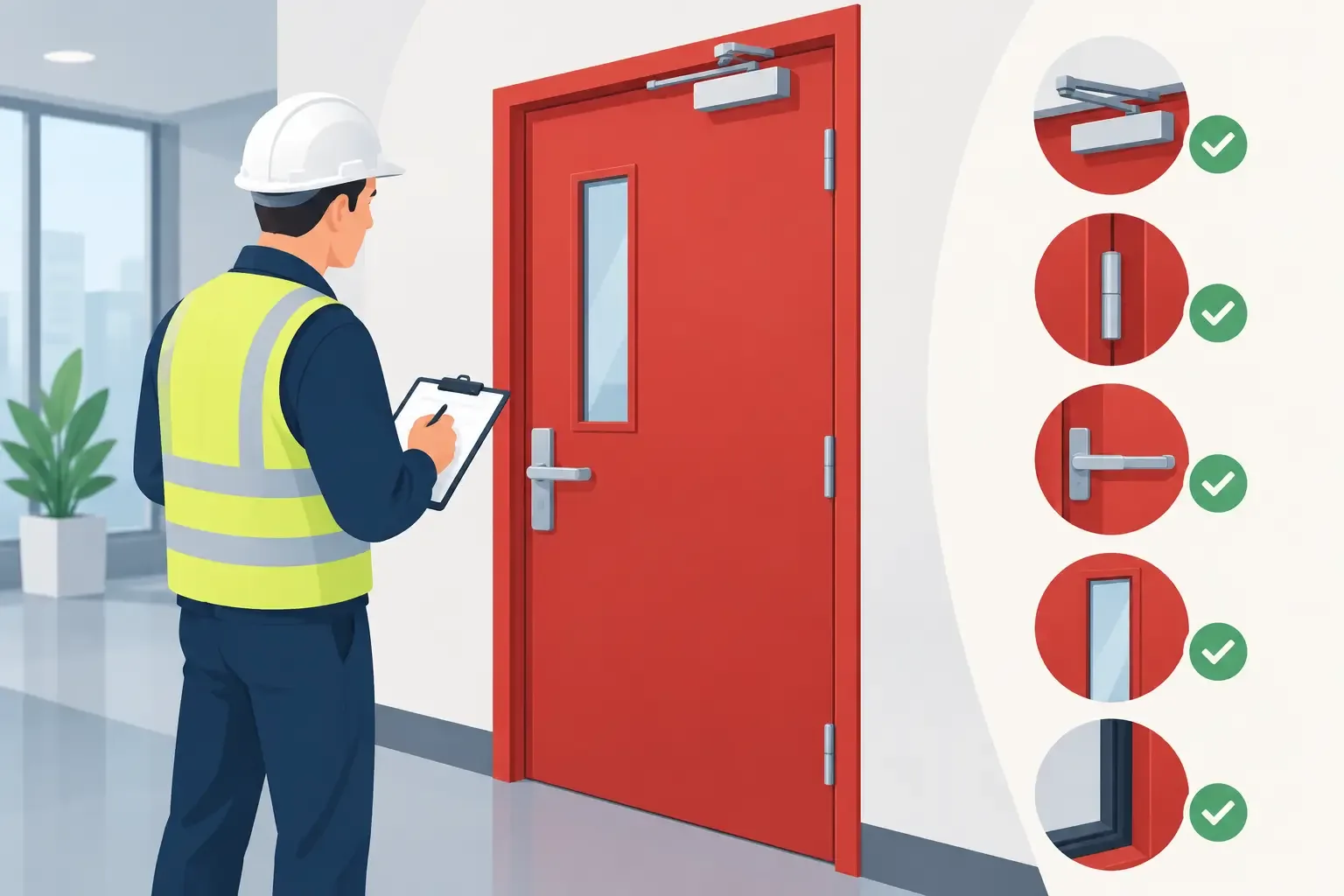
A fire door that looks intact can still fail when it matters. A gap that is too wide, a damaged closer, painted-over hardware, or an unapproved field modification can allow smoke and fire to spread beyond the room of origin. A professional fire door inspection service gives property teams a documented view of those risks before an incident, insurer review, or authority inspection exposes them.
For facilities managers, landlords, construction leaders, and operations teams, this is not a box-checking exercise. Fire doors support compartmentation, protect means of egress, and give occupants additional time to evacuate. The inspection record must be detailed enough to support corrective action and stand up to scrutiny.
Why fire door condition deserves focused inspection
Fire doors are life-safety assemblies, not ordinary doors with a label on the edge. The leaf, frame, hinges, latch, closer, seals, glazing, signage, and installed hardware work together to achieve a rated performance. Replacing or altering one component without checking compatibility can compromise that performance.
This is why general building walkthroughs are not always enough. A door may close during a casual test but still have excessive clearances, missing intumescent seals, loose hinges, or incompatible hold-open hardware. These issues are often missed in busy premises where doors receive constant use, are propped open for convenience, or are altered during fit-outs.
Risk is especially high in multifamily buildings, healthcare settings, schools, hotels, warehouses, offices, and mixed-use properties. In these environments, a defective fire door can affect not only one tenant or department, but an entire escape route, protected stair enclosure, corridor, or fire compartment.
What a fire door inspection service should assess
A competent inspection starts by identifying the door’s purpose, location, rating where known, and condition. It then assesses the assembly as installed, rather than treating the door leaf in isolation. The scope should reflect the building’s risk profile, use, occupancy, and applicable code requirements.
Door leaf, frame, and clearances
Inspectors check for warping, splits, holes, delamination, unapproved alterations, and damage caused by impact or moisture. They assess whether the leaf sits correctly within the frame and whether clearances around the top, sides, and bottom are within the limits required for that assembly and local code.
Excessive gaps are not cosmetic defects. They can permit smoke and hot gases to pass through protected openings far sooner than intended. A door that drags on the floor, binds against the frame, or has been trimmed without approval also requires attention.
Closing, latching, and hardware
A fire door must generally close fully from its open position and positively latch without assistance. The inspection should test the closer, latch, hinges, lockset, panic hardware where fitted, coordinator, and any hold-open device.
A common operational issue is a door that has been wedged open because staff find it difficult to use. Removing the wedge is necessary, but it does not solve the underlying problem. The closer may need adjustment, access control hardware may be incorrectly configured, or the door may be misaligned. A useful inspection report identifies the cause and the appropriate corrective work.
Seals, glazing, and penetrations
Intumescent and smoke seals must be present, correctly located, and in serviceable condition. Missing sections, paint buildup, compression damage, or incorrect replacement seals can reduce performance. Where smoke control is required, the inspection should also consider the relevant perimeter sealing arrangement.
Glazed panels, vision lights, and louvers require particular care. Fire-rated glazing, glazing beads, and associated components must be compatible with the tested assembly. Drilled holes for cabling, access devices, signage, or other additions should be reviewed because small unauthorized penetrations can create a significant compliance issue.
Labels, signage, and previous alterations
Labels and markings help establish the door’s listing, rating, and manufacturer information. While a missing or damaged label does not automatically prove a door is unsafe, it should trigger further review. Teams need to know whether the assembly can be verified, whether documentation is available, and what remedial route is defensible.
Inspectors should also identify alterations made after installation. New hardware, surface-mounted devices, kick plates, ventilation grilles, cables, and protective coverings may all affect the assembly. The right response depends on the listing, the installation instructions, and the authority having jurisdiction – not on assumptions made during maintenance.
Inspection frequency depends on risk and use
There is no sensible one-size-fits-all schedule. Applicable codes, adopted standards, insurance requirements, and local authority expectations will guide the formal frequency. In many US jurisdictions, annual inspection of certain fire door assemblies is a baseline expectation under NFPA 80, with documentation retained for review. High-use or high-risk locations may need more frequent checks.
A loading-dock door, busy stairwell door, hospital corridor door, or door exposed to repeated tenant turnover should not receive the same practical attention as a rarely used service-room door. Property teams should also arrange an inspection after construction work, water damage, a fire event, forced entry, hardware replacement, or changes to access-control systems.
Between formal inspections, site personnel should report obvious defects promptly. Doors propped open, damaged closers, missing seals, and latch failures should be treated as operational defects, not deferred until the next scheduled visit.
Documentation turns findings into control
The value of a fire door inspection is not limited to identifying defects. It creates an auditable trail showing what was inspected, where it was located, what condition it was in, who completed the work, and what actions were recommended.
A clear report should include a unique door reference, location, photographs where useful, defect descriptions, priority ratings, and recommended remediation. It should distinguish between urgent defects that affect immediate life safety and planned repairs that can be managed through a defined maintenance program.
This matters when responsibility is shared. A building owner may control common-area doors, a tenant may control suite doors, and a contractor may have introduced a defect during renovation. Good records reduce uncertainty, assign actions clearly, and help managers demonstrate that known risks were acted on rather than ignored.
Inspection is not the same as repair or certification
These services are related, but they are not interchangeable. An inspection identifies and records the condition of an assembly. Remedial work corrects faults. Certification or third-party verification may involve additional requirements depending on the product, installation, jurisdiction, and project scope.
Be cautious of providers who promise that every door can be made compliant through a quick adjustment. Some defects can be corrected through hardware repair, closer adjustment, seal replacement, or compatible component installation. Others may require a specialist review, replacement leaf, frame work, or a new listed assembly. The correct solution depends on what is installed and the evidence available to support it.
Choosing a provider that can support the full response
A useful provider does more than identify problems. They understand fire door assemblies, can explain findings in operational terms, and provide reports that help a responsible person prioritize action. They should be able to work around occupied premises, coordinate with security and access-control arrangements, and maintain appropriate records without disrupting critical operations.
For larger estates, consistency matters. Inspections should use a defined methodology across sites, with door references and reporting formats that make trends visible. Repeated closer failures in one building, for example, may point to a traffic-flow issue, poor hardware selection, or a maintenance gap rather than isolated defects.
The strongest programs also connect inspection findings to the wider fire-safety plan. Fire risk assessments, emergency lighting, alarm testing, evacuation arrangements, staff training, and fire door maintenance should not operate as disconnected tasks. They are parts of the same duty of care.
Protect the barrier before it is tested
Fire doors are only dependable when their condition is known, their defects are acted on, and their role is understood by the people who use the building every day. Schedule inspections that produce practical evidence, clear accountability, and a realistic repair plan. When a door is called upon to contain fire and smoke, there is no opportunity to revisit a missed defect.