

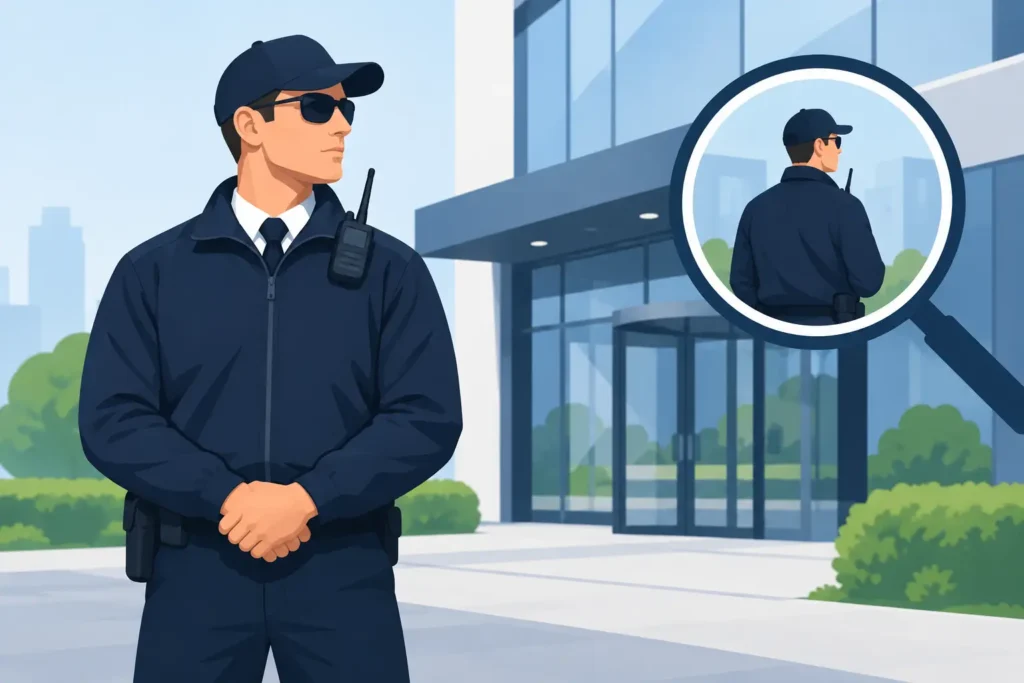
A locked gate, a camera, and an alarm panel can all have a place in a security plan. None can replace the judgment of a trained professional standing at the point where risk actually occurs. Manned guarding gives organizations visible control of their premises, a capable response when circumstances change, and an accountable record of what happened and when.
For facilities managers, property teams, construction leaders, and operations directors, the question is rarely whether protection is needed. The issue is whether the protection in place will stand up to an incident, an insurance query, a client audit, or regulatory scrutiny. A guard presence must do more than fill a post. It must operate to clear instructions, recognize risk early, control access consistently, and escalate incidents without delay.
What Manned Guarding Actually Delivers
Manned guarding is the deployment of trained security personnel to protect people, property, operations, and access points. Depending on the environment, officers may control entry and visitor registration, patrol a site, monitor surveillance systems, conduct searches where appropriate, manage deliveries, protect vacant property, or provide an immediate response to alarms and incidents.
Its value is not limited to deterrence, although a professional security presence can discourage trespass, theft, vandalism, and unauthorized access. The greater value is active decision-making. A guard can challenge an unfamiliar person, identify unsafe behavior, recognize an unsecured fire exit, direct emergency services, preserve evidence, and make a proportionate decision before a minor concern becomes operational disruption.
This matters most on sites where conditions do not stay static. A construction project changes as contractors, materials, plant, and access routes change. A commercial building receives visitors, deliveries, and maintenance providers throughout the day. A residential development requires a balance between welcoming legitimate occupants and preventing uncontrolled entry. Technology records activity, but trained people interpret it in context.
Where a Guarded Presence Makes the Difference
The right guarding model depends on the risk profile, operating hours, site layout, and the consequences of failure. A high-value industrial facility may need gatehouse control and scheduled perimeter patrols. A corporate office may need front-of-house officers who combine professional visitor management with discreet security awareness. A vacant property may require patrols, access checks, alarm response, and evidence of inspections for insurers or property stakeholders.
Construction sites are a particularly clear example. Theft of tools, fuel, cable, and plant can cause immediate financial loss, but the operational impact often costs more. Delayed work, replacement procurement, damaged access points, and disputes over responsibility can affect the project schedule. A guard who checks credentials, controls vehicle movement, records deliveries, and identifies perimeter weaknesses helps protect both assets and continuity.
Event environments bring a different challenge. Entry management, crowd behavior, emergency routes, and communication with organizers all require personnel who can remain calm and professional under pressure. Security should support the event experience while maintaining firm control over capacity, restricted areas, and incident response.
Guarding Is Strongest When It Is Site-Specific
A generic instruction sheet creates generic results. Effective manned guarding begins with a site assessment that identifies what needs protection, when exposure is highest, who should have access, and how incidents must be handled. This produces clear assignment instructions rather than assumptions made at the gate.
Post orders should define practical details: entry procedures, keyholder contacts, patrol routes, restricted zones, lone-worker concerns, emergency arrangements, reporting thresholds, and escalation contacts. They should also account for the site’s fire-safety controls. A guard needs to know where emergency exits, fire assembly points, alarm panels, and critical safety equipment are located, as well as the boundaries of their role during an evacuation.
The goal is not to turn guards into fire engineers or emergency responders beyond their training. It is to make sure the frontline team can recognize a developing issue, act safely, communicate accurately, and support the established emergency plan. Security and fire safety become unreliable when each is managed in isolation.
The Difference Between Presence and Performance
A uniform at a reception desk is not evidence of effective protection. Performance comes from selection, training, supervision, and proof of delivery. Decision-makers should expect guarding personnel to be appropriately licensed or credentialed for their jurisdiction and role, vetted, trained in conflict management and incident procedures, and briefed for the specific site.
Supervision matters just as much as recruitment. Officers need accessible management support, relief coverage, routine quality checks, and a clear route for escalating concerns. Without this structure, important observations may remain in a notebook, shift handovers may become inconsistent, and recurring vulnerabilities may never be addressed.
Good reporting turns frontline activity into accountability. Shift reports, patrol records, incident logs, access exceptions, and photographs where appropriate provide evidence that agreed controls were completed. These records are useful after an incident, but they are also valuable before one. They help managers spot repeat access issues, damaged fencing, recurring antisocial behavior, poor lighting, or contractors who are not following site rules.
Integrating People, Technology, and Compliance
Manned guarding does not compete with CCTV, intruder alarms, access control, or remote monitoring. It makes those systems more effective. A camera identifies activity; a guard can investigate safely. An access system restricts a door; an officer can challenge tailgating or assist when a visitor credential fails. An alarm can notify a control room; trained personnel can assess the situation and coordinate the next step.
The right balance depends on the site. Continuous on-site coverage may be justified for high-risk locations, sensitive assets, complex public-facing environments, or sites where response time is critical. For lower-risk premises, scheduled patrols supported by monitored technology may provide better value. Reducing staffing simply to meet a budget target can create a false economy if it leaves long periods without response, verification, or visible control.
Compliance also requires a practical view. Security records can support duty-of-care obligations, insurer requirements, contractor management, and internal governance. They do not replace formal risk assessments or legal advice, but they show that protective measures were planned, delivered, reviewed, and escalated. That evidence can be decisive when a client, investigator, insurer, or regulator asks what controls were in place.
Questions to Ask Before Appointing a Guarding Provider
Procurement should focus on how the provider will run the service after the contract is signed. Ask who is accountable for site performance, how officers are selected and briefed, what happens if a guard is absent, and how management verifies patrols and reporting. Request clarity on incident escalation, out-of-hours support, supervisory visits, and the format of the records you will receive.
It is also worth testing whether the provider understands the operational reality of your location. A provider should ask about access patterns, vulnerable areas, delivery schedules, occupancy, existing systems, emergency procedures, and past incidents. If the proposed solution is identical for a warehouse, a residential block, and a live construction site, it has not been properly designed.
Spycon Security approaches guarding as part of a connected protection plan, bringing physical security, monitoring capability, and fire-safety awareness under clear operational accountability. That approach helps clients avoid the gaps that appear when separate contractors each assume someone else is managing the risk.
Set the Standard Before the First Shift
The most dependable guarding service starts with measurable expectations: what the officer must do, how often it must happen, what must be reported, and who makes decisions when conditions change. Set those standards before deployment, review them against real site activity, and treat every recurring concern as a control that needs strengthening. A guard presence becomes genuinely valuable when it gives your organization confidence that someone competent is watching, acting, and leaving an evidence trail when it matters.