

Fire Door Inspection London — All 33 Areas
Spycon Security provides fire door inspection and fire door survey services across Greater London, covering all 32 London boroughs and the City of London.
Spycon Security Ltd provides fire door inspection, fire door surveys and fire door inspection reports for London HMOs, blocks of flats and commercial premises. Our FireQual-qualified personnel inspect the agreed doors and produce photographic, door-by-door findings with remedial recommendations. We distinguish Regulation 10 routine checks from a detailed condition survey and identify the competent inspector responsible for the report. Door references, photographic reports, defect schedules and asset registers help you track flat entrance doors, communal doors and HMO doors. We agree the reporting format, inspection scope and access arrangements before attending.
We agree whether you need a detailed fire-door survey, a routine Regulation 10 check, or a defined follow-up inspection. For relevant residential buildings with a top storey more than 11 metres above ground, Regulation 10 requires quarterly communal-door checks and best endeavours to check flat entrance doors annually. These duties do not remove wider responsibilities for buildings below the threshold.
Spycon Security provides detailed fire door inspections and fire door surveys across London for landlords, HMO owners, managing agents, freeholders, block managers, housing providers, businesses and property managers. We inspect the fire doors that are already in your building and give you a clear picture of their condition. That means looking at the door leaf, frame, hinges, closer, seals, glazing, latch, ironmongery, gaps, signage and other relevant components rather than simply looking at the door and saying it is “fine”. Our team includes FireQual-qualified fire door inspectors and installers, with Q-Mark installers and competent supervision for
relevant work. Associated electrical work is undertaken by suitably competent AM2-qualified engineers or supervisors. Insurance is arranged through NAPIT, subject to the applicable policies.
We provide inspections for:
• HMOs
• Blocks of flats
• Flat entrance fire doors
• Communal fire doors
• Landlord properties
• Residential buildings
• Offices
• Shops
• Commercial premises
• Mixed-use buildings
• Managed property portfolios
A fire door inspection is a detailed check of a fire-resisting doorset to identify defects, damage, deterioration and maintenance issues that could affect its intended performance. A fire door is not just the door leaf. The complete doorset can include:
A problem with one component can affect the way the doorset performs. That is why a proper fire door survey London should look at the complete assembly. GOV.UK guidance says fire doors should be kept in efficient working order and good repair, and that relevant fire-door repairs
or replacement should be undertaken by competent people.
Our team includes FireQual-qualified inspection and installation personnel, Q-Mark installers and competent fire-door supervisors.
The named inspector is responsible for the survey findings.
Separately instructed repairs or installation are checked and
signed by the competent person responsible for that work.
Where Q-Mark-certified work is contracted, the responsible
certified organisation, applicable scope and scheme
documentation are identified. Individual training and the product’s evidence are distinct from certification of installation.
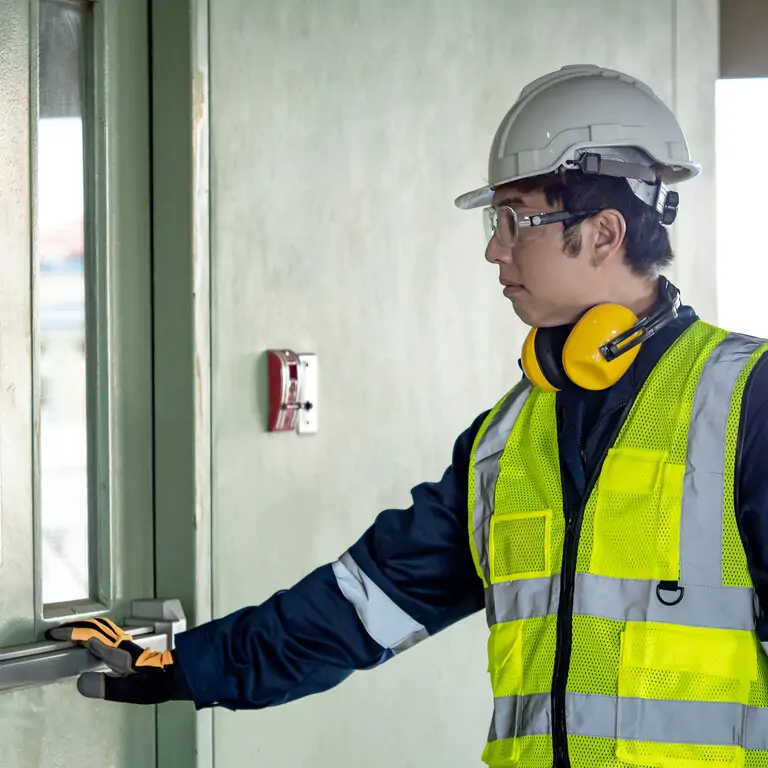
The agreed report identifies door references and locations,
photographs, observed defects, operational findings and
recommended actions. It distinguishes suitable repairs, further investigation and replacement recommendations. We record inaccessible doors and uncertainty about concealed work or product evidence. A visual survey cannot establish fire-resistance performance solely from the door’s appearance, weight or thickness.
Send the door schedule, fire strategy, previous survey and FRA where available. Arrange keys and appointments for flat entrance doors, with resident communication and a record of unsuccessful access attempts.
Opening up, access equipment, specialist investigation and
reinstatement require separate agreement.
Missing labels and older doors are assessed in context rather
than automatically treated as a requirement for complete
replacement.
AM2-qualified engineers or supervisors support relevant
electrical work on powered releases, hold-open devices and
access-control connections. They inspect, test and sign the electrical scope within their competence. The fire-door inspector or supervisor remains responsible for the door work.
Insurance is arranged through NAPIT, subject to the appropriate
policies, activities and limits.
Your quotation confirms the door count, survey scope, access arrangements, reporting format, delivery date, VAT and any agreed additional charges. Repairs and reinspection are separately priced unless included. Keep the findings and completion evidence together so future
checks can follow the same door references.
Landlords often need fire-door inspections for HMOs, converted
properties, shared accommodation and residential buildings.
A survey can help you identify:
• Damaged doors
• Doors that do not close properly
• Missing or damaged seals
• Loose hinges
• Damaged frames
• Problems with closers
• Excessive or inconsistent gaps
• Glazing concerns
• Missing signage
• Inappropriate alterations
• Other defects requiring attention
For larger properties, we can provide door-by-door fire door
inspection reports so you know which door has the problem
rather than receiving a generic building-level statement.
HMOs can contain several different types of fire doors.
Depending on the property, these may include:
• Bedroom doors
• Kitchen doors
• Communal-area doors
• Staircase doors
• Corridor doors
• Plant room doors
• Boiler or utility doors
• Meter cupboards
• Service riser doors
• Other doors protecting escape routes or compartments
The appropriate fire-door arrangement depends on the individual
building.
Factors can include:
• Number of storeys
• Number of occupants
• Sleeping accommodation
• Layout
• Escape routes
• Fire separation
• Existing fire strategy
• Fire Risk Assessment
• HMO licensing conditions
We do not assume that every HMO in London has the same firedoor specification.
Fire doors in apartment buildings are commonly divided between flat entrance fire doors and communal fire doors. They need to be considered separately because the statutory checking requirements can differ. For relevant multi-occupied residential buildings where the top storey is more than 11 metres above ground level, Regulation 10 of the Fire Safety (England) Regulations 2022 requires:
Checks at least every three months.
If you manage a qualifying residential building over 11m,
Regulation 10 should form part of your ongoing fire-door
management arrangements.
A routine check can identify obvious issues such as:
The Responsible Person should retain records of the checks.
Where flat access cannot be obtained, the Responsible Person
should record the steps taken to obtain access, as explained in
government guidance.
Uninspected doors are recorded as inaccessible.
A detailed fire door survey can go further where the building
manager needs a more structured condition assessment.
These terms are often used as though they mean the same thing.
They do not. A Regulation 10 check is a statutory routine check applying to certain relevant residential buildings. A fire door inspection or survey can be a more detailed assessment of the doorset’s condition and components.
A detailed survey may be appropriate where:
This is one of the areas where we try to keep our reports clear rather than using one phrase to cover several different services.
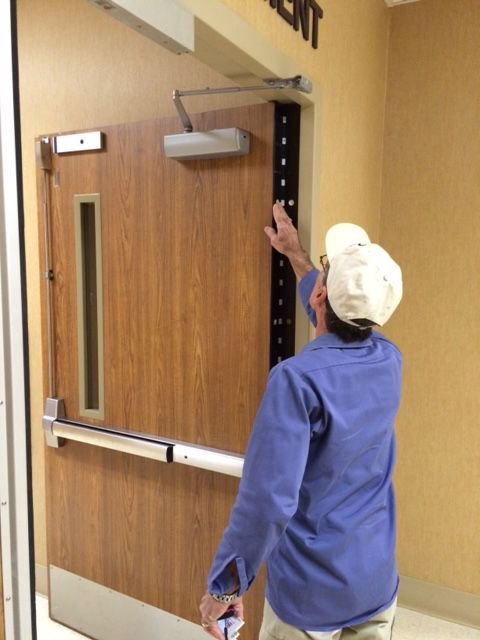
The Fire Safety Act 2021 clarified the application of the Fire Safety Order to certain parts of multi-occupied residential buildings. Importantly, it brought flat entrance doors between domestic premises and common parts clearly within the scope of the Fire Safety Order.
This means relevant flat entrance doors need to be considered as part of the building’s wider fire-risk assessment and fire-safety arrangements.
The inspection of those doors should therefore be considered
alongside the wider building fire strategy.
The Current Fire Door Code of Practice
The current standard is:
BS 8214:2026 — Fire-resisting and smoke-control doors —
Practical considerations concerning specification, design and
performance in use — Code of practice
BSI published the 2026 edition in March 2026, replacing BS
8214:2016.
It applies to fire-resisting and smoke-control pedestrian doors of different constructions, including:
• Timber
• Steel
• Aluminium
• Composite doors
The standard provides practical guidance covering matters such
as specification, design, performance and maintenance. This is particularly relevant when reviewing older online information because many London fire-door pages are still written around the superseded 2016 edition.
Every door is different, but our thorough inspection covers all critical components to ensure safety and compliance.
We look for:
We check:
Clearances around the door are evaluated against:
We check for:
Where fitted, we inspect for:
We check:
We consider the condition and operation of the closer where fitted.
Where a door contains glazing, we inspect:
Where applicable, signs can include:
The correct signage depends on the function and circumstances of the door.
Where present, we look for:
You will often see fire doors described as:
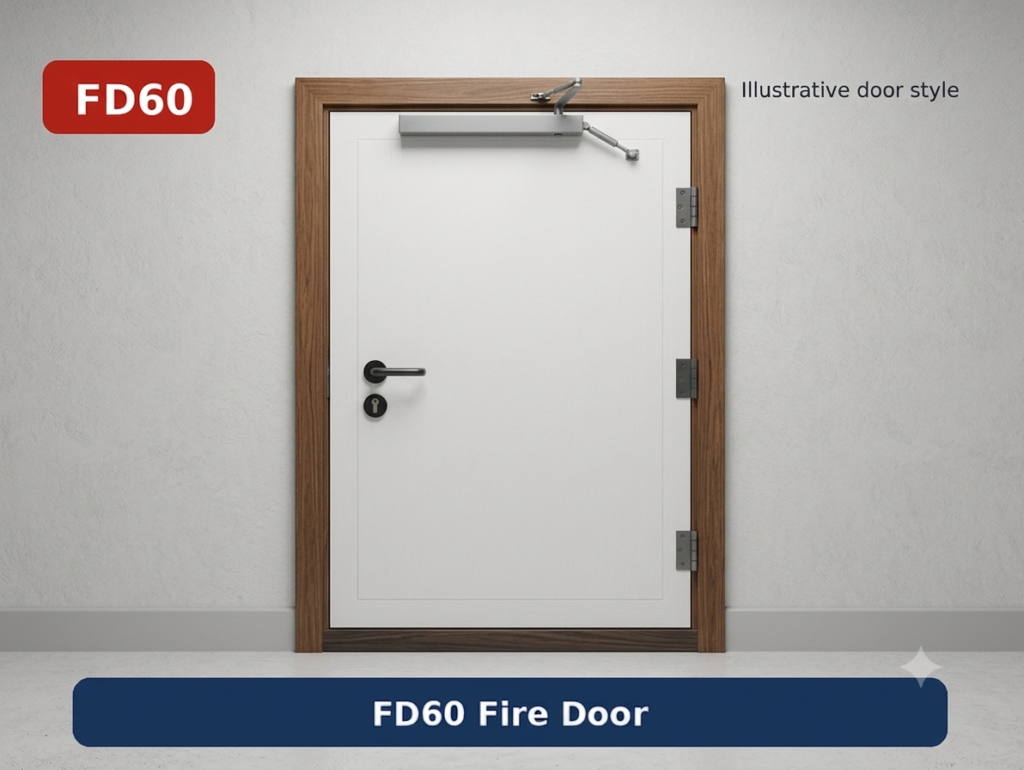
• FD30
• FD30S
• FD60
• FD60S
The number refers to the relevant fire-resistance classification and the S designation indicates smoke-control performance where applicable.
A fire-resistance classification associated with 30-minute performance under the relevant test/classification framework.
A 30-minute fire-resistance classification with additional smokecontrol performance.
A 60-minute fire-resistance classification.
A 60-minute fire-resistance classification with additional smokecontrol performance. These classifications should not be used on their own to decide whether a particular door is suitable for a building. The complete doorset and its installation matter.
A common mistake is to inspect only the door leaf.
The complete fire-resisting doorset can include:
• Leaf
• Frame
• Hinges
• Closers
• Latch
• Locks
• Seals
• Glazing
• Ironmongery
• Fixings
Our fire door survey therefore looks at the complete assembly
within the agreed scope.
A fire door survey is useful when a landlord, freeholder or
managing agent needs a clear picture of the condition of a
number of doors.
This can be particularly useful for:
• Blocks of flats
• HMOs
• Large residential buildings
• Commercial properties
• Older converted buildings
• Mixed-use buildings
• Property portfolios
An asset register, photographic schedule, door-by-door report
and prioritised defect list help you plan work and verify
completion. These records connect each finding to the correct door and give the contractor a clearer basis for repair or replacement advice. Our reporting follows the same practical principle: identify the door, identify the issue and explain what needs to happen next.
For larger properties, a door-by-door report can show:
• Door reference
• Location
• Door type where identifiable
• Condition
• Defects
• Photographs
• Recommended action
• Priority
• Notes for reinspection
This makes it easier to manage a large block without relying on a general statement that “some doors need attention”.
Photographs can make a fire door report much easier to use.
A photograph can show:
• Damaged seals
• Gaps
• Hinge problems
• Closer issues
• Door damage
• Frame defects
• Glazing problems
• Signage
• Other relevant observations
For managing agents and landlords, a photographic report can also provide a useful reference when obtaining repair quotations.
Typical findings can include:
Cracks, holes, cuts, impact damage or other alterations.
Distortion, damaged sections or fixing problems.
Missing or damaged intumescent or smoke seals.
Loose or damaged hinges and fixings.
The door does not close correctly or the closer is damaged.
The door does not reliably close and latch.
Damage or uncertainty around the glazing arrangement.
Clearance that requires further investigation.
Missing or inappropriate signs.
Drilling, cutting or hardware changes that may require investigation.
Finding a defect does not always mean the entire door needs
replacing. Depending on the defect and available evidence, some doors may be capable of suitable remedial work.
Possible actions can include:
Any repair needs to be compatible with the particular doorset and its intended fire performance. Where a door cannot reasonably be repaired or there is insufficient evidence to establish its suitability, further assessment or replacement may need to be considered.
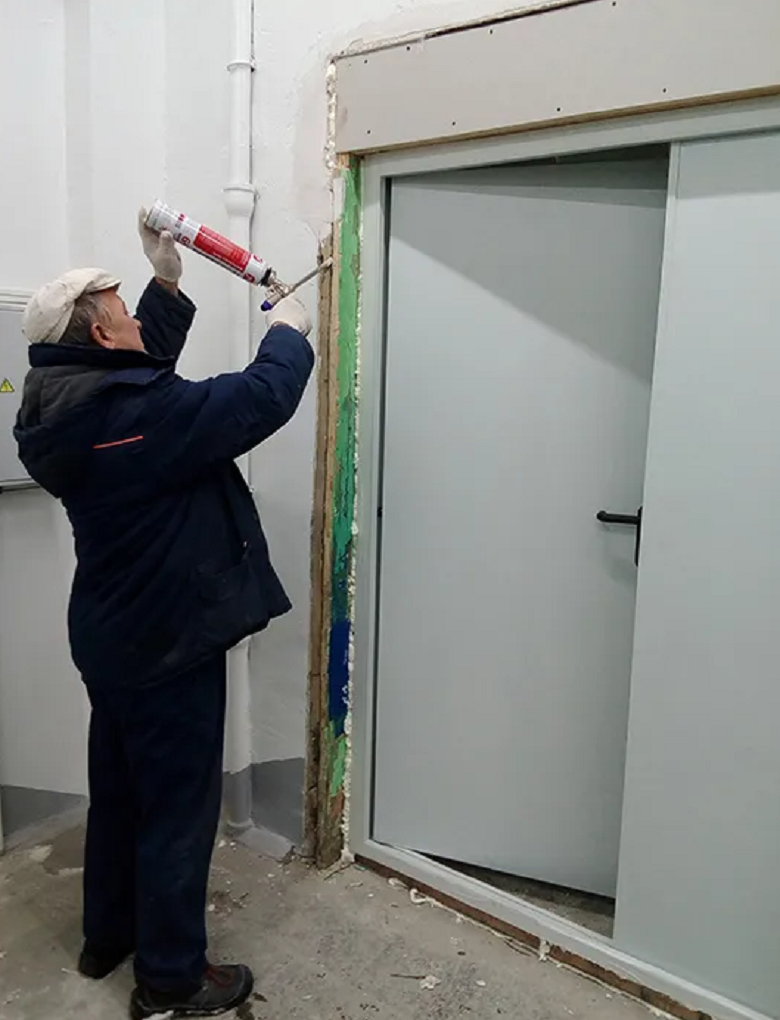
Our reports are intended to help you make decisions.
A defect schedule can identify:
That information can then be used by the landlord, managing
agent or maintenance team to plan the work.
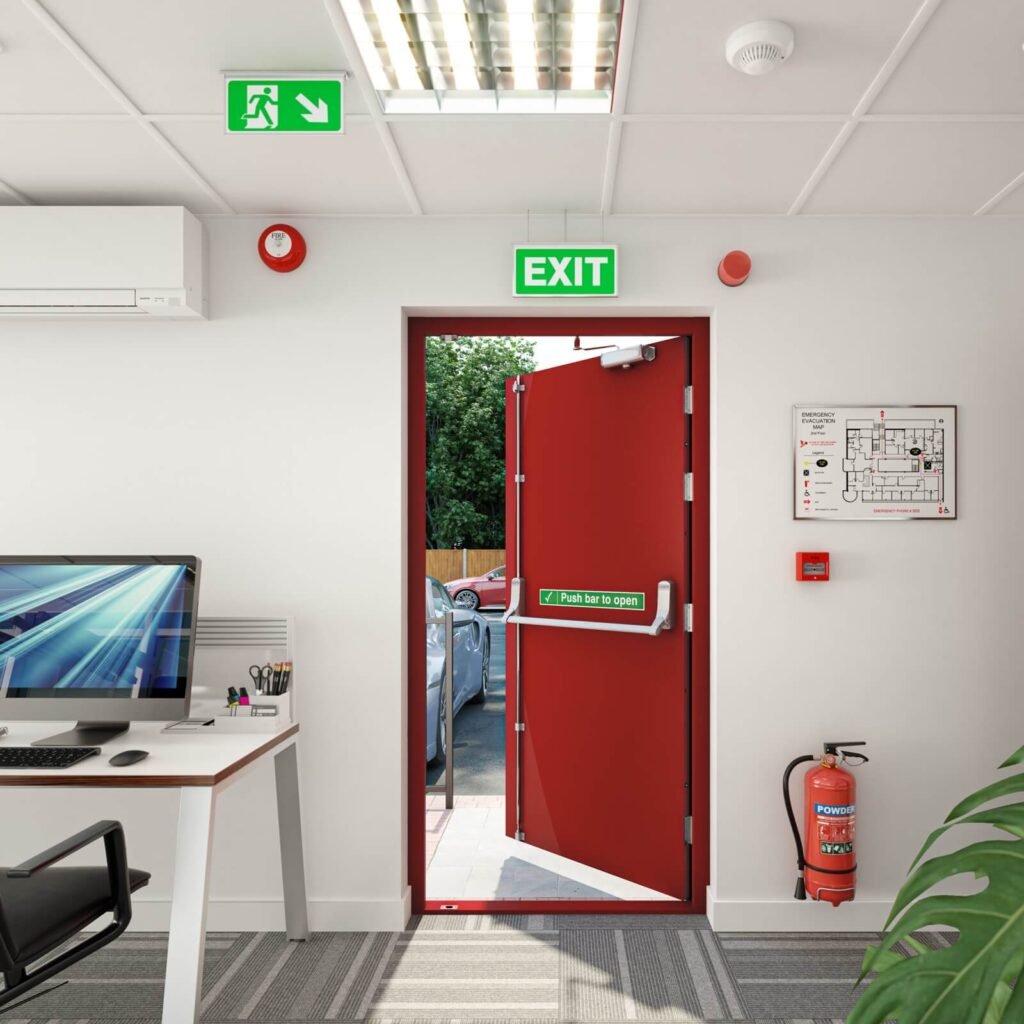
Fire doors are common throughout commercial buildings.
We can inspect doors in:
Doors may protect:
The inspection scope depends on the property and the purpose of the doors.
For managing agents, the main challenge is often not finding one defective door. It is knowing the condition of all the doors. A structured survey can give you:
This can make maintenance planning much easier.
For housing associations and larger residential portfolios, consistency matters. A standardised survey can cover:
The resulting schedule can then be used to help organise maintenance and future inspection programmes.
Our fire-door inspection capability includes FireQual-qualified fire door inspection personnel. FireQual provides a Level 3 Award in Fundamentals of Fire Door Inspection, designed to develop the knowledge and skills needed for fire-door inspection. This is directly relevant to the inspection side of the service.
Our Q-Mark installers and competent fire-door supervisors support relevant installation and maintenance work. The appointed inspector remains responsible for inspection findings. BM TRADA Q-Mark schemes certify defined installation or maintenance activities through the responsible certified organisation and scope.An individual’s training is distinct from scheme certification of the appointed organisation and contracted work
Associated electrical work is undertaken by competent AM2- qualified engineers or supervisors. Insurance is arranged through NAPIT, subject to policy scope. This can be relevant to associated equipment such as:
The appropriate qualification depends on the work being undertaken.
Someone can look at a door and see that it closes. A competent inspection goes further. It asks:
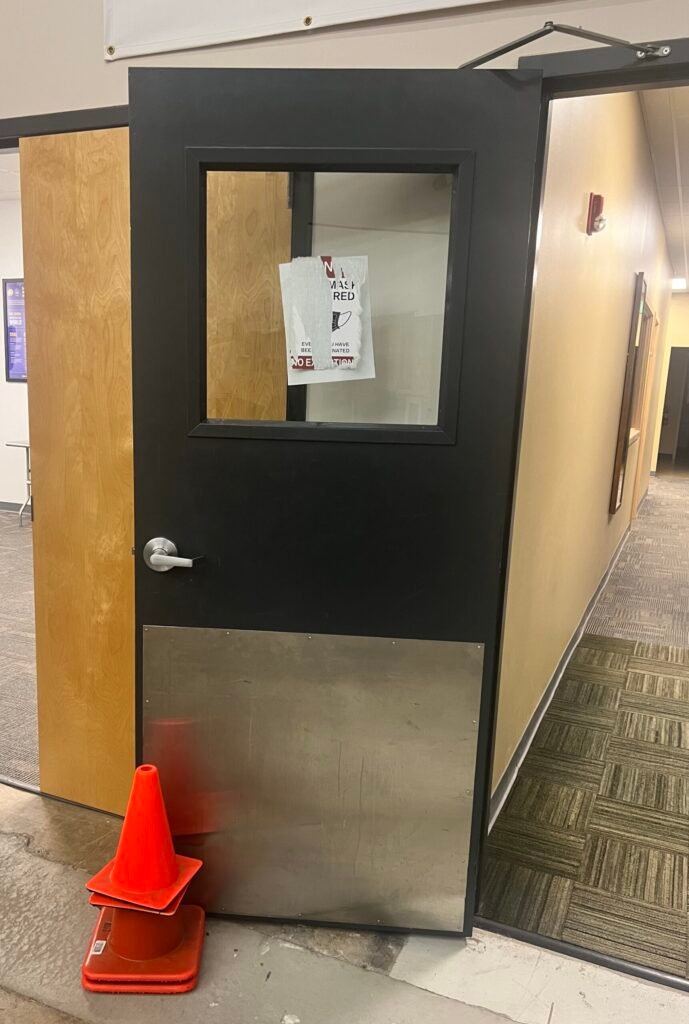
There is no single inspection interval that applies to every fire door in every building. The appropriate programme depends on:
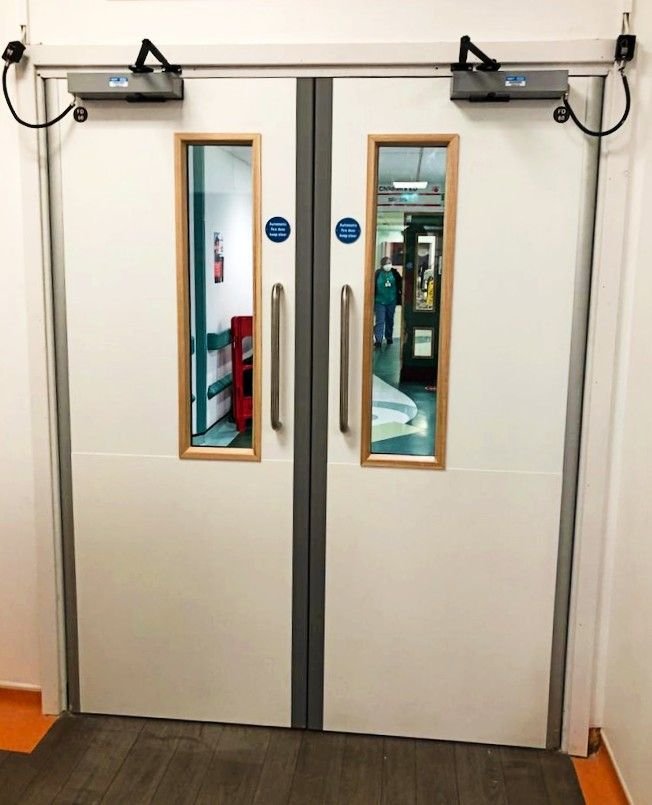
Comprehensive fire door surveys and ongoing inspection frameworks designed to maintain legal compliance, protect life safety, and fulfill regulatory obligations.
Mandatory quarterly checks to inspect common parts fire doors, ensuring self-closers, seals, hinges, and latches operate without defect.
Annual best-endeavours checks on flat entrance doors to ensure safety integrity between private dwellings and communal exit routes.
Inspection and maintenance protocols driven by the Fire Safety Order (FSO) and tailored to the property's specific Fire Risk Assessment.
Spycon Security provides fire door inspection and fire door survey services across Greater London, covering all 32 London boroughs and the City of London.
Bexley
Fire door inspection and condition reporting.
Bromley
HMO and residential fire door surveys.
Croydon
Landlord, HMO and commercial fire door inspection.
Greenwich
Fire door survey and reporting.
Kingston
upon Thames Residential and commercial fire door inspection.
Lambeth
HMO, landlord and commercial fire door surveys.
Lewisham
Fire door inspections for landlords and property managers.
Merton
Residential and commercial fire door surveys.
Southwark
HMO, block of flats and commercial fire door inspections.
Sutton
Fire door survey and reporting.
Wandsworth
Residential, HMO and commercial fire door inspection.
The exact inspection requirements depend on the property, firerisk assessment, door type and applicable legislation.
Barnet
HMO, landlord and residential fire door surveys.
Enfield
Fire door inspections and condition reporting.
Haringey
HMO and communal fire door inspections.
Harrow
Landlord and commercial fire door surveys.
Hillingdon
Residential and commercial fire door inspection.
Barking and Dagenham
HMO and landlord fire door inspections.
Hackney
Residential and commercial fire door surveys.
Havering
Fire door inspection and defect reporting.
Newham
HMO and residential fire door surveys.
Redbridge
Landlord and HMO fire door inspection.
Tower Hamlets
Communal and flat entrance fire door surveys.
Waltham Forest
Residential and commercial fire door inspection.
Brent
HMO and commercial fire door surveys.
Ealing
Office, landlord and residential fire door inspection.
Hammersmith and Fulham
Commercial and residential fire door surveys.
Hounslow
Fire door inspection and reporting.
Richmond
upon Thames Residential and commercial fire door inspection.
Bexley
Fire alarm testing and certification for landlords and businesses.
Bromley
Inspection and servicing for HMOs and residential premises.
Croydon
Fire alarm certificates for HMOs, landlords and commercial properties.
Greenwich
Testing and servicing for residential and commercial premises.
Kingston upon Thames
Fire alarm inspection for HMOs, landlords and businesses.
Lambeth
Fire alarm testing and certification for HMOs and commercial
premises.
Lewisham
Inspection and servicing for landlords, HMOs and businesses.
Merton
Fire alarm certificates for residential and commercial properties.
Southwark
Testing and certification for HMOs, mixed-use and commercial buildings.
Sutton
Fire alarm inspection and servicing for landlords and businesses.
Wandsworth
Fire alarm certification for residential, HMO and commercial premises.
The fire alarm requirements are not necessarily identical between properties or boroughs. Local licensing conditions, the building’s fire risk and the system already installed all need to be considered.
Don’t wait until it’s too late. Ensure your property is protected and compliant with a professionally installed fire alarm system.
It is a physical assessment of a fire-resisting doorset and relevant components to identify defects, damage, deterioration and maintenance issues.
No. A fire risk assessment considers the wider fire risks of the building. A fire door inspection focuses specifically on the doors.
A survey is generally a more structured assessment of a number of fire doors, often involving door-by-door records, photographs and defect schedules.
It depends on the building and its fire-safety arrangements. Regulation 10 establishes quarterly communal-door and annual flat-entrance-door checks for relevant residential buildings over 11m.
Regulation 10 of the Fire Safety (England) Regulations 2022 sets specific fire-door checking duties for relevant multi-occupied residential buildings.
For relevant buildings over 11m, yes.
For relevant buildings over 11m, the Responsible Person must use best endeavours to check them at least every 12 months.
It is the current BSI code of practice for fire-resisting and smokecontrol doors and supersedes BS 8214:2016.
FD30 is a fire-resistance classification associated with 30-minute performance under the relevant test/classification framework.
It combines the relevant FD30 fire-resistance classification with smoke-control performance.
It is a fire-resistance classification associated with 60-minute performance.
It depends on the door, doorset specification and supporting evidence. LFB’s public guidance states that top and side gaps should be consistently below 4mm, while the bottom clearance depends on the door.
Where a self-closing device is required for that door, it needs to function correctly so the door can close properly.
Often, yes. Some defects can be remedied without replacing the entire door, but repairs need to be appropriate for the particular doorset.
No. A defect needs to be assessed in context. Existing doors should not automatically be replaced simply because they predate the latest standard.
Yes, subject to access and agreed scope.
Yes, where photographic reporting forms part of the agreed scope.
Yes, where photographic reporting forms part of the agreed scope.
Yes. Door-by-door surveys can be carried out for larger blocks, HMOs and commercial properties.
Our inspection capability includes FireQual-qualified fire door inspection personnel.
Yes. Our team includes Q-Mark installers and competent supervisors for relevant installation or remedial work. Scheme scope is confirmed for the appointment.
Our AM2-qualified engineers or supervisors undertake and sign off the electrical work within their competence and agreed scope.
Yes. Insurance is arranged through NAPIT, subject to the relevant policies, limits and activities.
Yes. Where appropriate, we can help with remedial recommendations and suitable follow-up work.
Uncompromising technical expertise, modern regulatory standards, and transparent reporting tailored for high-standard fire safety governance.
Our inspection capability includes fully FireQual-qualified fire-door inspection personnel committed to exacting standards.
Q-Mark certified installers and competent supervisors oversee and support all agreed door works and completion verifications.
Relevant electrical works are executed by AM2-qualified engineers or supervisors, with NAPIT insurance arranged subject to scope.
We actively adhere to the current fire-door code of practice rather than relying on the superseded 2016 edition.
Granular reporting where every inspected door maintains its own photographic record, exact findings, and condition log.
Transparent and organized schedules detail exactly what requires attention, its severity, and precise location within the property.
We provide actionable explanations and repair guidance rather than simply marking a door as "failed".
Complete operational footprint covering all 32 London boroughs and the City of London—providing 33 region coverage.
Partner with Spycon Security for trusted fire door surveys and accredited inspection reports.
Whether you have one HMO, a block of flats, a commercial building or a larger property portfolio, Spycon Security can provide a clear picture of your fire doors. Our services include:
• Fire Door Inspection London
• Fire Door Survey London
• Fire Door Inspection Report London
• Fire Door Inspection Certificate London
• HMO Fire Door Inspection London
• Landlord Fire Door Inspection London
• Flat Entrance Fire Door Inspection London
• Communal Fire Door Inspection London
• Regulation 10 Fire Door Checks London
• Commercial Fire Door Inspection London
• Fire Door Condition Survey London
• Door-by-Door Fire Door Survey
• Photographic Fire Door Inspection
• Fire Door Defect Report
• FD30 Fire Door Inspection
• FD30S Fire Door Inspection
• FD60 Fire Door Inspection
• FD60S Fire Door Inspection
• BS 8214:2026 Fire Door Inspection
• Fire Door Maintenance Inspection London
Call 020 4600 4703
Request Your Fire Door Survey
Send us the property address, type of building and approximate number of fire doors. We can then discuss the inspection scope, access arrangements and the report you need.
Fire door inspections are carried out within the agreed scope. An inspection or survey does not replace a Fire Risk Assessment or statutory routine checks where separately required. The appropriate inspection and any remedial action depend on the building, doorset, available evidence, fire strategy and applicable legal and technical requirements.