
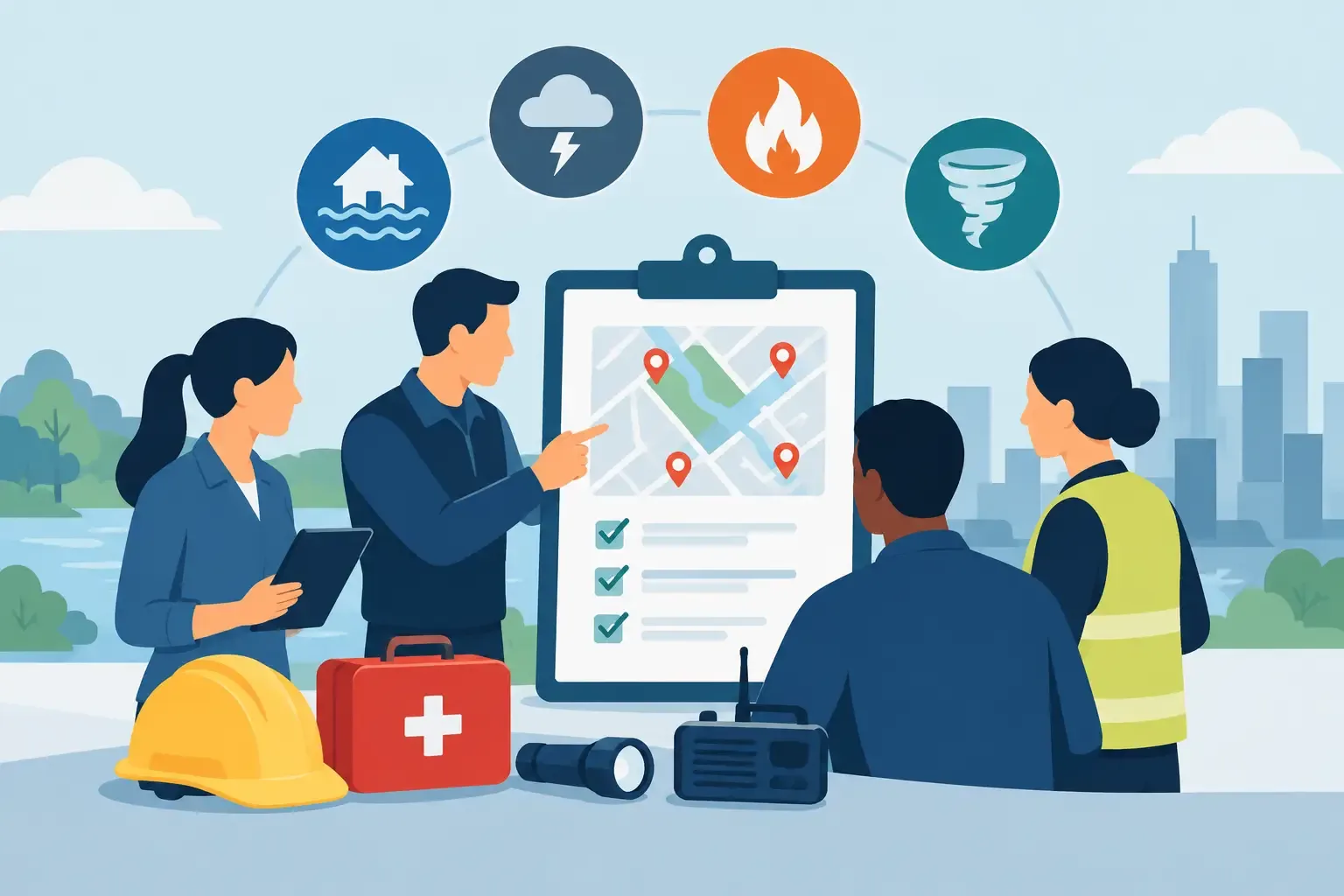
At 2:17 a.m., an alarm, forced entry alert, gas leak, electrical fault, or medical emergency does not wait for the right manager to be available. The quality of your emergency response planning determines whether people receive clear direction, responders get accurate information, and your organization retains control of the scene.
A written plan alone is not enough. It must reflect the building, the people using it, the risks created by operations, and the systems that support protection after hours. It also needs to stand up to scrutiny from insurers, regulators, emergency services, employees, residents, clients, and senior leadership.
What Effective Emergency Response Planning Covers
Emergency response planning is the operational bridge between recognizing an incident and restoring safe, controlled operations. It establishes who acts, what they do, how they communicate, and when they hand responsibility to emergency services or specialist contractors.
The scope should extend beyond fire evacuation. Depending on the site, credible plans may need to address medical incidents, security breaches, suspicious packages, violent behavior, utility failures, flooding, severe weather, hazardous material releases, lift entrapments, and loss of critical systems. A corporate office, construction project, logistics facility, residential building, and public event venue will not need the same response model.
That distinction matters. Copying a generic template may create a document, but it rarely creates control. A plan for a multi-tenant property, for example, must account for shared areas, differing occupancy patterns, visitors, contractors, mobility needs, and out-of-hours access. A remote industrial site may instead depend on accurate escalation, reliable communications, controlled entry, and a fast method of accounting for personnel.
Start With the Risks That Can Disrupt Your Site
The strongest plans begin with a site-specific risk review. This means looking at how an event could start, who could be affected, what barriers already exist, and where the response could fail.
Walk the premises at the times when risks change. Daytime observations will not reveal every issue at night, during shift change, while deliveries are arriving, or when a site is partially occupied. Review access points, escape routes, assembly areas, fire doors, alarm coverage, emergency lighting, CCTV views, utility shutoffs, hazardous storage, and areas where people could become isolated.
Operational dependencies deserve the same attention. If an access-control system fails, can staff secure sensitive areas manually? If the fire alarm activates, does the monitoring center have the right contacts and site information? If power is lost, how long do emergency lighting, communications, refrigeration, server rooms, gates, or safety-critical equipment remain functional?
Risk priorities should be realistic. A low-probability incident with severe consequences may require detailed preparation, while a frequent but limited disruption may need a shorter, repeatable procedure. The right level of detail depends on the hazard, occupancy, location, legal duties, and the capability available on site.
Set Clear Command, Communication, and Escalation
During an emergency, uncertainty causes delay. Plans should identify an incident lead for each operating period, along with deputies who can take control if the primary contact is unavailable. These roles need authority, training, and access to the information required to act.
A practical response structure usually defines four functions:
- Incident leadership, including decisions on evacuation, lockdown, shutdown, and liaison with emergency services.
- Life safety coordination, including sweeps where safe, support for vulnerable people, and accountability at assembly points.
- Security and access control, including perimeter management, preservation of CCTV or access records, and clear routes for responders.
- Communications and recovery, including internal updates, contractor coordination, incident logs, and decisions on reopening.
One person can hold more than one function in a small facility. On a larger site, those responsibilities should be separated. What matters is that every task has an assigned owner and every owner has a backup.
Communication procedures must be equally direct. Staff need to know which alarm signal applies, where to report, what information to provide, and who is authorized to communicate externally. Emergency services need an accurate address, access instructions, known hazards, occupancy information, and a point of contact who can meet them. Vague directions such as “call management” are not a response procedure.
Keep critical contact details controlled and current. This includes emergency services, building management, keyholders, security personnel, alarm receiving centers, utilities, restoration providers, IT support, and specialist fire or safety contractors. Review changes immediately when personnel, tenants, systems, or site layouts change.
Build Procedures People Can Use Under Pressure
An emergency plan should not read like a policy manual. It should give people concise, ordered actions that can be followed under stress. Use plain language, clear triggers, and decisions that reflect the site’s real conditions.
For a fire or smoke event, the procedure may cover alarm activation, evacuation, calls to emergency services, assembly, roll call, access for responders, and the prohibition on re-entry until authorized. For a security incident, it may cover observation, immediate safeguarding, police notification, controlled access, evidence preservation, and communication to affected occupants.
Some incidents require a different protective action. Evacuation is not always the safest response. A violent threat, external hazard, or dangerous weather event may require lockdown, sheltering, or movement away from windows and external doors. The plan should define the circumstances for each action without encouraging staff to make specialist threat assessments beyond their competence.
Include arrangements for people who may need assistance. This can involve personal emergency evacuation plans, refuge communications, trained assistants, accessible routes, or tailored procedures for visitors and contractors. Assumptions are not acceptable where safe evacuation depends on planned support.
Connect Physical Protection With Life Safety Systems
Security and fire safety controls should support the same response objective: protect people first, preserve control of the premises, and provide reliable evidence of what happened.
CCTV can help verify an alarm activation, identify a developing security threat, guide responders to the correct entrance, and preserve a factual incident record. Access control can restrict entry during a lockdown or identify who may still be on site. Trained security personnel can secure a perimeter, manage vehicle access, assist with evacuation, and provide a calm point of contact until emergency services arrive.
Fire alarms, emergency lighting, fire doors, extinguishers, signage, and trained fire marshals all play a direct role in a safe response. Yet these systems only perform as intended if they are inspected, maintained, and understood by the people responsible for using them. A disconnected approach creates gaps: a monitored alarm without current keyholder information, a locked gate that delays fire apparatus, or an evacuation route compromised by poor access management.
The plan should record system limitations as well as capabilities. For example, security staff should know which cameras cover the assembly area, whether gates fail open or closed during a power outage, and where manual call points, fire panels, and utility isolation points are located. Accurate site information saves time when it matters most.
Test the Plan Before a Real Incident Tests It
A plan that has not been practiced is a set of assumptions. Drills, tabletop exercises, and scenario-based reviews reveal whether instructions are clear, roles are understood, and systems perform as expected.
Start with credible scenarios rather than abstract exercises. Test an overnight alarm activation when the building has minimal staffing. Run a fire evacuation during a busy delivery period. Consider a medical emergency in an isolated area, a flood affecting electrical equipment, or an unauthorized person attempting to enter a restricted area during an event.
Observe what actually happens. Did people hear the instruction? Was the assembly area accessible? Could managers account for visitors? Did the incident lead have the correct numbers? Did a contractor leave a fire door wedged open or block a route? Record the findings, assign corrective actions, and set completion dates. An exercise only adds value when lessons are turned into measurable improvements.
Review the plan at least annually and after any significant incident, drill, renovation, occupancy change, system upgrade, or change in operating hours. Documentation should show version control, training records, drill outcomes, inspection evidence, and corrective actions. These records demonstrate that emergency readiness is managed, not merely claimed.
Make Accountability Part of the Response
Emergency readiness is strongest when one accountable structure connects site personnel, security operations, fire-safety systems, contractors, and management. Fragmented responsibilities create the exact delays that plans are meant to prevent.
The practical goal is not to predict every emergency. It is to give people clear authority, dependable systems, accurate information, and rehearsed actions when conditions become uncertain. Build the plan around how your site truly operates, test it honestly, and keep improving it before the next alarm demands an answer.