


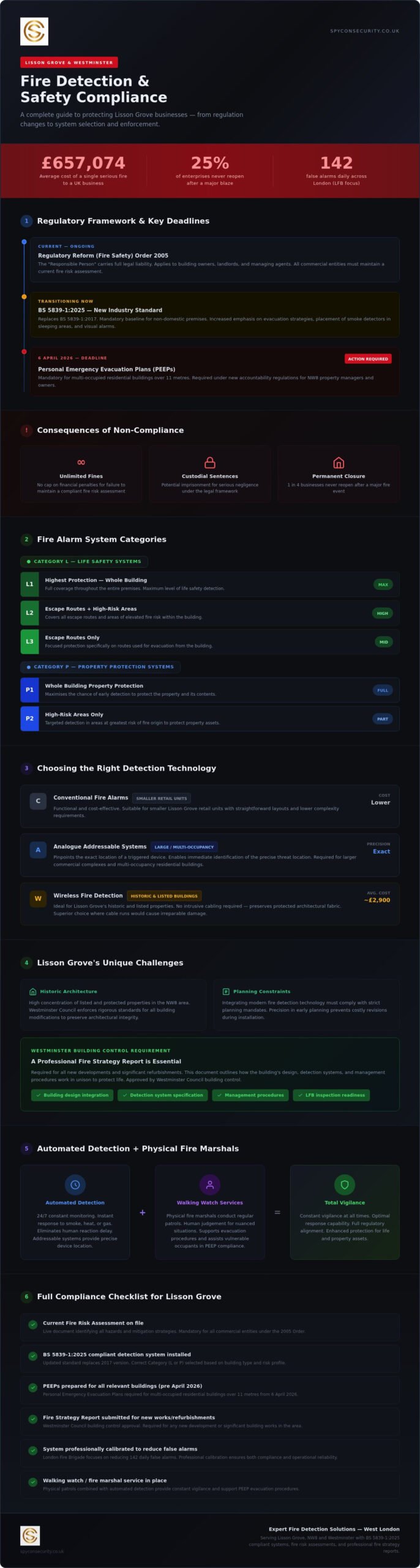
A single serious fire costs the average UK business £657,074; for many, it is a terminal event. Statistics show that 25% of enterprises never reopen their doors following a major blaze. Protecting your assets requires more than a basic alarm. It demands a sophisticated fire detection system Lisson Grove business owners can depend on during a crisis. In an area defined by historic architecture and strict Westminster Council oversight, the margin for error is non-existent. You understand that compliance isn’t just about avoiding fines; it’s about safeguarding lives and operational continuity.
Navigating the April 2026 Personal Emergency Evacuation Plan (PEEP) requirements and the updated BS 5839-1:2025 standards can be complex. This guide simplifies the path to total protection. We’ll show you how to secure your premises with British Standard-compliant systems whilst managing the specific constraints of local buildings. You’ll learn about the latest installation protocols, the necessity of professional fire strategy reports, and how to achieve full regulatory alignment without disrupting your daily operations.
Key Takeaways
- Master the April 2026 regulatory shift by implementing Personal Emergency Evacuation Plans (PEEPs) and adhering to the latest BS 5839-1:2025 standards.
- Select the optimal fire detection system lisson grove for your specific premises by distinguishing between Category L and Category P protection levels.
- Optimise your safety protocols by integrating automated detection with professional walking watch services to ensure constant vigilance.
- Secure Westminster building control approval through the development of a professional fire strategy report tailored to historic property constraints.
- Minimise legal and financial exposure by conducting a rigorous fire risk assessment that identifies vulnerabilities before they become liabilities.
Understanding Fire Safety Regulations in Lisson Grove and Westminster
The legal landscape governing fire safety in West London is undergoing a significant transition. Under the Regulatory Reform (Fire Safety) Order 2005, the “Responsible Person” carries the full weight of legal liability for any failure in safety protocols. This role typically falls to building owners, landlords, or managing agents. Starting 6 April 2026, new regulations demand even greater accountability, particularly regarding Personal Emergency Evacuation Plans (PEEPs) for multi-occupied residential buildings over 11 metres. For those managing assets in NW8, installing a robust fire detection system lisson grove is not merely a recommendation; it’s a statutory requirement to ensure the safety of all occupants and the survival of the business.
Lisson Grove presents unique challenges due to its high concentration of historic and listed properties. Westminster Council maintains rigorous standards for building modifications. Preserving the architectural integrity of these structures whilst integrating modern fire detection technology requires a disciplined, expert approach. Professional guidance ensures that safety hardware meets current standards without violating local planning constraints. Precision in the early planning stages prevents costly revisions during the installation phase.
The Legal Framework for Lisson Grove Businesses
Every commercial entity in West London must maintain a current fire risk assessment. This document is a live record of hazards and mitigation strategies. Failure to comply leads to severe consequences. Penalties include unlimited fines and potential custodial sentences for serious negligence. The shift to BS 5839-1:2025 emphasises evacuation strategies and visual alarms, moving away from the less stringent 2017 standards. Adhering to these updated protocols is the only way to guarantee full regulatory alignment and provide peace of mind to stakeholders.
Westminster Council Building Control and Fire Safety
Securing building control approval in Westminster requires meticulous documentation. A comprehensive fire strategy report London is essential for new developments or significant refurbishments. This report outlines how the building’s design, detection systems, and management procedures work in unison to protect life. The London Fire Brigade conducts site inspections to verify these strategies. Their focus on reducing the 142 daily false alarms across the capital means your fire detection system lisson grove must be professionally calibrated. Local expertise ensures your hardware satisfies both the brigade’s operational requirements and the council’s planning mandates.
Selecting the Right Fire Detection Technology for Your Premises
Choosing the correct hardware for your fire detection system lisson grove is an exercise in technical precision. The hardware must align with the specific risks identified in your building’s fire strategy. Whilst the previous BS 5839-1:2017 was the industry benchmark, the transition to the BS 5839-1:2025 standard is now the mandatory baseline for non-domestic premises. This updated standard places a rigorous emphasis on evacuation strategies and the placement of smoke detectors in sleeping areas. Adhering to these Fire Safety Regulations in Lisson Grove ensures your premises are not only compliant but prepared for rapid response.
For smaller Lisson Grove retail units, conventional fire alarms offer a functional, cost-effective solution. However, larger commercial complexes or multi-occupancy residential buildings require analogue addressable systems. These systems provide the exact location of a triggered device, allowing for immediate identification of the threat. In Lisson Grove’s historic or listed buildings, wireless fire detection solutions are often the superior choice. They bypass the need for intrusive cabling that can damage protected architecture. While the average cost for a wireless system is approximately £2,900, the preservation of the building’s fabric often justifies the investment.
Fire Alarm Categories and Their Applications
System selection is dictated by the required Category. Category L (Life Safety) systems range from L1, which provides the highest level of protection throughout the building, to L3, which focuses on escape routes. Commercial environments often necessitate L2 protection in high-risk areas. Conversely, Category P (Property Protection) systems are designed to protect the building when it’s unoccupied, such as storage centres or warehouses. Integrating smoke, heat, and carbon monoxide detectors ensures a multi-layered defence against diverse fire types.
Modern Innovations in Fire Detection
Technical advancements are transforming urban fire safety. Multi-sensor detectors are now a standard recommendation for busy West London offices. These devices combine optical and heat sensing to drastically reduce false alarms. Property managers are also increasingly adopting remote monitoring and mobile alert systems for real-time diagnostics. With the rise of electric vehicle charging and high-density battery use, specific lithium battery fire detection is becoming a critical component of modern installations. Our team of disciplined safety experts can help you evaluate which of these innovations is essential for your site’s specific risk profile.
The Synergy Between Automated Detection and Physical Fire Marshals
Technical hardware provides the initial alert, but it cannot execute a complex evacuation strategy. A professional fire detection system lisson grove is most effective when integrated with a disciplined human response protocol. Automated sensors identify the presence of smoke or heat; they don’t lead vulnerable occupants to safety or manage the chaos of a real-world emergency. With the London Fire Brigade responding to an average of 142 false alarms every day, the ability to verify a threat before emergency services are dispatched is critical. This approach prevents the financial and operational fallout of unnecessary building evacuations.
Walking Watch Services in High-Density Lisson Grove Sites
There are specific scenarios where a 24/7 patrol is a legal necessity. If your detection hardware is undergoing maintenance or if the building’s fire safety integrity is compromised, a walking watch or fire marshal must be deployed immediately. These professionals provide constant vigilance, patrolling corridors and plant rooms to identify hazards that sensors might miss. Integrating manned guarding with fire panel monitoring ensures that your premises are never left unprotected during out-of-office hours. This human layer of defence is essential for sites transitioning from temporary measures to permanent detection installations.
Fire Safety Training and Evacuation Protocols
Compliance depends on the readiness of your personnel. Designing site-specific evacuation plans is a core requirement for Lisson Grove businesses, particularly those operating in multi-storey or historic structures. Your fire detection system lisson grove provides the data, but your marshals execute the safety plan. Regular fire safety training for designated marshals ensures they understand their roles during a crisis. Training must be rigorous and verified. Adhering to industry best practices involves conducting realistic fire drills that test every aspect of your response strategy. In the complex urban environment of Westminster, a well-drilled team is the difference between a controlled evacuation and a disaster.
Designing a Compliant Fire Strategy for Lisson Grove Businesses
Establishing a fire strategy is a methodical process rooted in professional rigor. It begins with a comprehensive fire risk assessment. This document is the foundation of your safety architecture. It identifies specific hazards and vulnerabilities within your Lisson Grove premises. From this data, a formal fire strategy report is drafted. This document is essential for securing building control approval from Westminster Council. It details how the building’s design and your fire detection system lisson grove work in unison to mitigate risk and protect occupants.
Implementation follows the planning phase with absolute precision. This involves the installation of certified hardware. High-quality alarms and compliant fire doors are non-negotiable components of a lawful installation. Once the hardware is in place, the system enters a lifecycle of constant readiness. Rigorous maintenance and testing schedules are mandatory under UK law. Under BS 5839-1, weekly tests and quarterly professional inspections ensure the system remains operational. Meticulous record-keeping in your fire logbook is required to demonstrate compliance during inspections.
The Fire Strategy Report: A Critical Component
A professional report must align with Approved Document B of the Building Regulations. In Lisson Grove, where historic building constraints are common, this report is the primary tool for negotiating planning permissions. It provides building control officers with the technical assurance that your fire detection system lisson grove meets all life safety requirements. The strategy must account for evacuation routes, fire-fighting access, and smoke ventilation. Without this professional document, new developments or major refurbishments risk significant delays and legal challenges from local authorities.
Fire Door Compliance and Installation
Fire doors are the silent guardians of your compartmentalisation strategy. They prevent the spread of smoke and flame between building sections, buying vital time for evacuation. Regular fire door surveys are necessary to identify remedial needs, such as worn intumescent seals or faulty self-closing mechanisms. All installations must meet FD30 or FD60 standards, denoting 30 or 60 minutes of fire resistance respectively. Ensuring every door is correctly rated and maintained is a fundamental part of your overall fire strategy. Our disciplined safety consultants can help you design a strategy that satisfies both legal mandates and operational needs.
Spycon Security: Expert Fire Detection Solutions in West London
Spycon Security Ltd. provides a disciplined and methodical approach to protecting your premises. Our expertise is rooted in a deep understanding of the unique regulatory environment within the City of Westminster. For businesses seeking a fire detection system lisson grove, we offer more than just hardware; we deliver a complete safety ecosystem. Our team navigates the complexities of commercial fire alarm system regulations UK with absolute precision. We ensure your site is ready for the April 2026 mandate through rigorous planning and official verification.
Our authoritative presence in West London is built on a foundation of reliability and professional gravity. We don’t just install systems; we act as a watchful guardian for your assets. Every recommendation we make is designed to provide unwavering protection and total peace of mind. By choosing a partner that understands the high-stakes nature of fire safety, you mitigate the risk of non-compliance fines and operational failure.
Professional Fire Alarm Installation in London
Our installation protocols are designed for operational excellence. The process for fire alarm installation London begins with a technical site survey. We specialise in the sensitive architecture of Lisson Grove, where historic building constraints require meticulous care. Every sensor and control panel is positioned to maximise detection efficiency whilst respecting the building’s fabric. Following installation, we provide comprehensive certification and documentation. This ensures your business records meet the high standards expected by insurers and local authorities.
Bespoke Protection for Your Assets
True security requires a multi-layered strategy. We offer a unique synergy between physical protection and technical detection. For high-value sites in Lisson Grove, we combine canine units and SIA licensed manned guarding with automated fire panels. This integrated approach ensures that a human response is always available to verify alerts and manage evacuations. Our commitment to uncompromising standards provides the peace of mind that only a seasoned guardian can offer. You can learn more about our professional fire safety services and how we tailor them to your specific risk profile.
Securing your premises is a matter of professional integrity. We don’t allow for shortcuts or substandard equipment. Every project is handled by experts trained to operate with absolute precision. Contact Spycon Security Ltd. today for a bespoke fire safety consultation. We will evaluate your current systems, identify compliance gaps, and implement a robust fire detection system lisson grove that stands up to the most rigorous scrutiny.
Securing Your Lisson Grove Premises for the 2026 Mandate
The landscape of fire safety in Westminster is shifting. Compliance with the April 2026 PEEP requirements and BS 5839-1:2025 standards is now a legal imperative. Your fire detection system lisson grove must be more than a collection of hardware. It must be a verified component of a disciplined safety strategy. Integrating advanced technology with professional fire strategy reports is the only way to satisfy building control whilst ensuring life safety. Precision in planning prevents operational failure.
Spycon Security provides the rigorous expertise needed to navigate these complexities. Our SIA Licensed Security Experts deliver Westminster Building Control approved strategy reports and 24/7 professional surveillance capabilities. We ensure your installation is precise, compliant, and uncompromising. Protecting your assets and personnel requires a partner committed to professional gravity and vigilant protection. You don’t have to navigate these regulations alone.
Learn more about Spycon Security’s professional fire safety services to secure your premises today.
Frequently Asked Questions
Is a fire detection system mandatory for all Lisson Grove businesses?
Yes, it is mandatory. Under the Regulatory Reform (Fire Safety) Order 2005, every business must have an adequate means of fire detection. This requirement applies to all commercial premises in Lisson Grove, regardless of size. The system must be appropriate for the building’s specific risk profile. Failure to implement a compliant fire detection system lisson grove leaves the Responsible Person liable for prosecution and endangers the lives of every occupant.
How often should a fire alarm system be professionally serviced in the UK?
Professional servicing is required at least every six months. According to BS 5839-1, a competent person must inspect and test the system twice annually to ensure operational readiness. This is distinct from the weekly tests your designated staff should perform. Regular servicing identifies faulty components and prevents false alarms. Maintaining a detailed service record in your fire logbook is essential for demonstrating compliance to the London Fire Brigade.
Can I install a wireless fire detection system in a listed building in Lisson Grove?
Wireless systems are often the optimal solution for listed buildings. These properties frequently have strict planning constraints that prohibit intrusive cabling. A wireless fire detection system lisson grove allows for full British Standard compliance without damaging the historic fabric of the structure. This technology uses secure radio frequencies to connect devices, providing the same level of reliability as wired alternatives whilst satisfying Westminster Council’s conservation requirements for protected architecture.
What is the difference between a fire risk assessment and a fire strategy report?
A fire risk assessment is a mandatory audit of existing hazards. It identifies risks and suggests mitigation steps for an occupied building. Conversely, a fire strategy report is a comprehensive design document typically required for building control approval. It outlines how the building’s architecture and detection systems work together to meet life safety objectives. Westminster Council often demands a professional strategy report for new developments or significant refurbishments in West London.
Who is legally responsible for fire safety in a multi-tenanted Lisson Grove office?
The legal duty lies with the “Responsible Person”. In a multi-tenanted Lisson Grove office, this is usually the building owner or managing agent for common areas. However, individual employers are responsible for the safety of their specific staff and demised spaces. Cooperation between all parties is a statutory requirement. Each entity must share their fire risk assessments to ensure the building’s overall fire strategy remains cohesive and effective during an emergency.
What happens if my business is found to be non-compliant with fire safety laws?
Non-compliance results in severe legal and financial penalties. The London Fire Brigade has the authority to issue enforcement notices or prohibition notices that can close your premises immediately. Courts can impose unlimited fines and custodial sentences for serious breaches of the Fire Safety Order. Additionally, most commercial insurance policies are invalidated if a fire occurs in a non-compliant building. This leaves the business owner personally liable for all damages and losses.
How long does a typical fire alarm installation take for a commercial premises?
Installation timelines vary based on building complexity. A small retail unit in Lisson Grove may take one to two days for a standard wired installation. Larger commercial complexes or multi-storey offices typically require one to two weeks. Wireless systems can often be deployed faster due to the lack of extensive cabling. Our process focuses on operational precision to ensure the system is fully commissioned and certified with minimal disruption to your daily business activities.
Do I need a fire marshal if I have an automated fire detection system?
Automated systems and fire marshals are complementary safety layers. While your detection hardware provides the initial alert, a trained marshal is required to manage the human element of an evacuation. Marshals verify the source of the alarm to prevent false dispatches and ensure all occupants exit safely. In high-risk scenarios or during system downtime, a walking watch service provides the continuous human vigilance necessary to maintain a safe and compliant environment.