

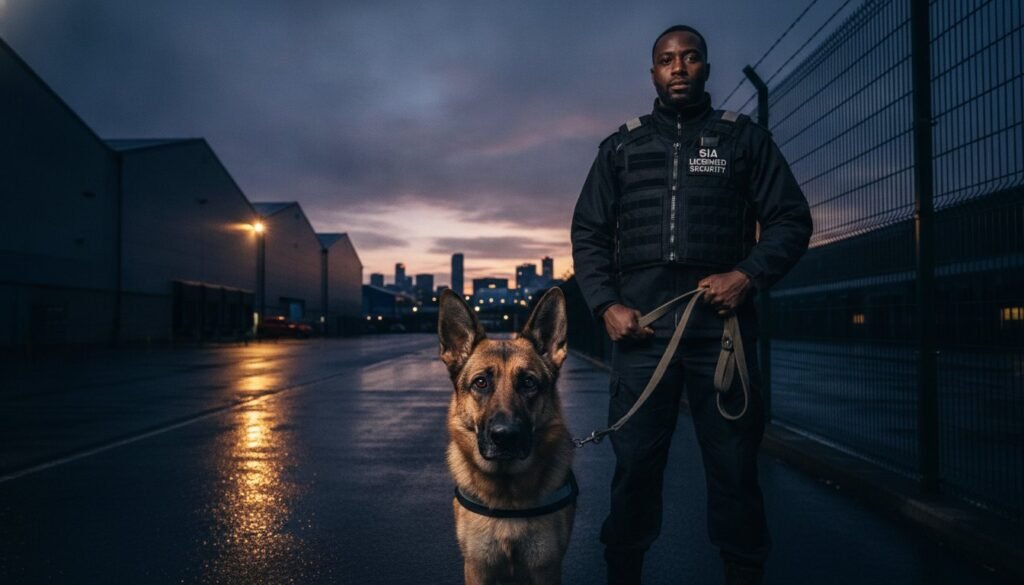
A standard perimeter fence is often nothing more than a suggestion to a determined intruder. You understand that even the most advanced thermal cameras and high-tech sensors can be bypassed by those who recognise their blind spots. For large UK sites or high-risk assets, the persistent threat of theft, arson, and unauthorised occupation requires a more proactive, sensory-driven response. Deploying professional canine security is not just a physical barrier; it’s a psychological force multiplier that provides detection capabilities humans simply cannot match.
In this definitive guide, you’ll discover how these elite units provide an unmatched deterrent for your premises. We’ll examine the strict legal framework governing security dogs in the UK and help you determine if a K9 unit is the right fit for your specific sector. Finally, we’ll provide the essential criteria for selecting a reputable, SIA-licensed provider to ensure your site remains secure, compliant, and under constant, vigilant protection.
Key Takeaways
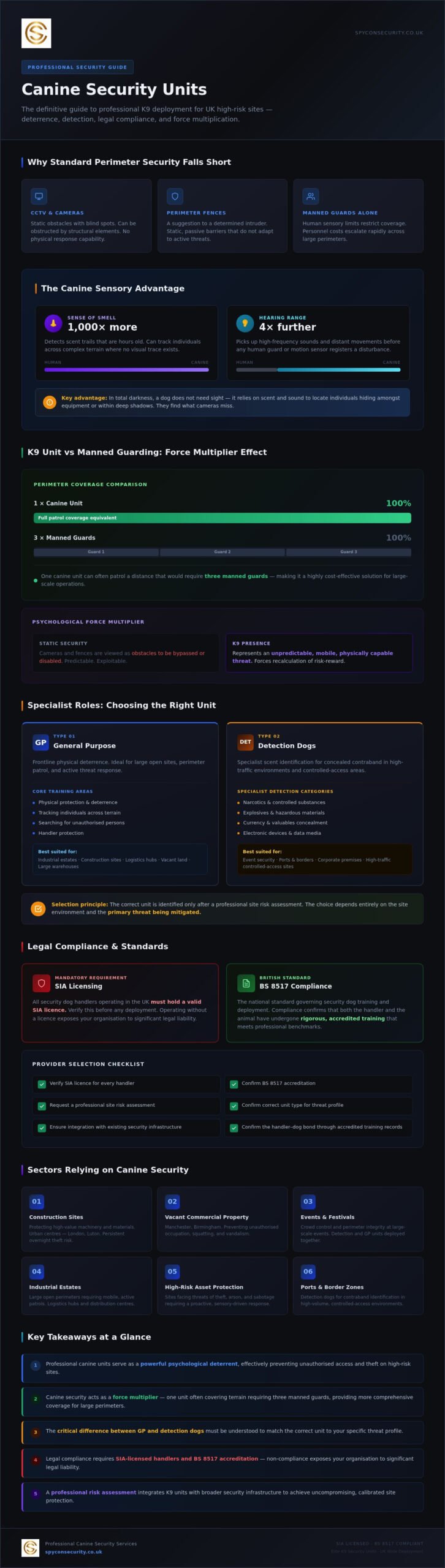
- Professional canine units serve as a powerful psychological deterrent, effectively preventing unauthorised access and theft on high-risk sites.
- Discover why canine security acts as a force multiplier, often providing more comprehensive coverage for large perimeters than multiple manned guards.
- Identify the critical differences between general purpose and detection dogs to ensure your security strategy matches your specific threat profile.
- Verify that your security provision meets legal requirements by understanding the necessity of SIA-licensed handlers and BS 8517 compliance.
- Learn how a professional risk assessment integrates K9 units with your broader security infrastructure to achieve uncompromising site protection.
What is Canine Security and Why is it Vital for UK Sites?
Canine security represents the elite tier of physical protection. It’s the strategic deployment of highly trained protection dogs alongside SIA-licensed handlers. This is a specialised discipline. It’s not merely about having a dog on-site; it’s about a disciplined, professional unit. This pairing creates a formidable security presence that traditional methods cannot replicate. Whilst technology provides oversight, a K9 unit provides an active, physical response. It’s about uncompromising reliability on the ground.
The psychological impact of a security dog is immediate and profound. Intruders often view cameras or fences as static obstacles to be bypassed or disabled. A trained dog is different. It represents an unpredictable, mobile, and physically capable threat. This presence alone often prevents trespassing before it even begins. For high-risk sites, this deterrent effect is invaluable. It forces potential criminals to reconsider the risk-to-reward ratio of their actions.
The Sensory Advantage of Security Dogs
A dog’s biological capabilities far exceed human limits. Their sense of smell is thousands of times more sensitive than ours. They detect scent trails that are hours old and can track individuals across complex terrain. Their hearing is equally acute. They pick up high-frequency sounds and distant movements long before a human guard or a motion sensor registers a disturbance. This makes them the ultimate early-warning system.
This sensory edge is critical in ‘blind spots’. Large warehouses or sprawling construction sites often have areas where CCTV coverage is obstructed by structural elements. In total darkness, a dog does not need sight. It relies on scent and sound to locate individuals hiding amongst equipment or within deep shadows. They find what cameras miss. They provide a level of detection that is both meticulous and absolute.
Common Applications Across the UK
Across the UK, specific sectors rely on this level of vigilance to maintain order. In London and Luton, construction firms use canine units to protect high-value machinery and materials. The risk of theft in these urban centres is persistent. Professional handlers ensure these assets remain untouched throughout the night. It’s a standard of protection that provides genuine peace of mind for project managers.
Vacant commercial properties in Manchester or Birmingham face specific risks from unauthorised occupation, squatting, and vandalism. A K9 unit provides the necessary presence to secure these perimeters effectively. Similarly, event security often integrates dogs for crowd control and perimeter integrity at large festivals. One canine unit can often patrol a distance that would require three manned guards. This makes it a highly cost-effective solution for large-scale operations where personnel costs can otherwise escalate rapidly.
Specialist Roles: General Purpose vs Detection Canine Units
Effective canine security is not a one-size-fits-all solution. Training paths for these animals diverge early to meet specific operational demands. The choice of unit depends entirely on the site environment and the primary threat being mitigated. Whether the objective is preventing unauthorised entry across a sprawling perimeter or identifying concealed contraband in a high-traffic area, the success of the mission rests on selecting the correct specialist role. It is a decision that requires technical expertise and a clear understanding of the site’s unique vulnerabilities.
The foundation of this operational success is the bond between the handler and the dog. This is not a casual relationship; it is a disciplined partnership forged through hundreds of hours of rigorous, accredited training. Spycon organises the most appropriate unit only after conducting a thorough site risk assessment. This ensures the team deployed is perfectly calibrated to your specific security requirements, providing a level of vigilant protection that is both elite and dependable. Every deployment is a calculated response to a verified risk.
General Purpose (GP) Security Dogs
GP dogs serve as the primary frontline of physical deterrence. They are trained in three core areas: protection, tracking, and searching for unauthorised persons. These units are highly effective for securing perimeters and expansive open spaces, such as industrial estates, logistics hubs, or vacant land. Their presence is a clear, visual signal of high-level protection that discourages even the most determined trespassers. They are the ultimate mobile barrier.
Beyond tracking, these dogs are trained in ‘handler protection’. This ensures the safety of the security professional in volatile situations or when patrolling isolated areas. If a handler is threatened, the dog is trained to respond with controlled, decisive action. This makes them a vital asset for lone-worker protection in high-risk environments where manual patrols might be vulnerable. They provide a layer of physical security that technology alone cannot replicate.
Specialist Detection Dogs
Specialist detection units, often referred to as ‘sniffer dogs’, are trained to identify specific scents with absolute precision. This includes prohibited substances, explosives, or accelerants used in arson. Unlike GP dogs, detection dogs often work in high-traffic public areas or sensitive environments. They are trained to operate discreetly, identifying threats without causing alarm or disruption to the general public. Their work is quiet, methodical, and highly effective.
These units employ either passive or proactive detection methods. Passive dogs scan moving crowds or queues at transit hubs, whilst proactive dogs search static areas like lockers, vehicles, or freight. This versatility is essential for maintaining safety in complex urban settings. If you are managing a large-scale gathering, integrating these units with your event security plan provides a layer of detection that human senses cannot match. They ensure that hidden threats are neutralised before they can escalate.
Canine Security vs Manned Guarding: The Force Multiplier Effect
Integrating canine security into a site’s defence strategy fundamentally changes the operational dynamic. While traditional manned guards are essential for many roles, a single K9 unit often provides the equivalent coverage of two or three static personnel. This efficiency is a result of the dog’s superior movement and sensory range. For site managers, this translates to a significant reduction in total personnel required without compromising on safety. It is a strategic consolidation of resources that addresses the rising costs of traditional security deployments on expansive sites.
The active deterrent factor cannot be overstated. Intruders are statistically less likely to confront a security dog than a human guard. The risk of physical engagement is perceived as too high, making the dog a more effective barrier than a lone individual. Dogs also significantly reduce the human error factor. During night patrols or in low-visibility conditions, human concentration can waver. Dogs do not get tired or distracted by the environment. They remain in a state of constant, focused readiness, ensuring that every corner of the premises is under vigilant observation.
Enhanced Detection Range
A human guard’s detection radius is limited by line of sight and torchlight. In contrast, a trained dog can detect a scent trail from several hundred metres away, even in total darkness or through heavy rain. In a security context, the Force Multiplier effect refers to a factor that dramatically increases the protective effectiveness of a unit without increasing its actual size. For sprawling sites like industrial estates, car parks, or logistics hubs requiring comprehensive warehouse security services, this means one handler and dog can secure an area that would otherwise require multiple personnel to monitor effectively. It is a more efficient use of manpower that ensures no breach goes unnoticed. For a detailed real-world example of this operational precision in action, see how specialist dog handlers London achieved total site clearance and established a formidable deterrent on a complex, high-risk urban site.
Psychological Deterrence and Conflict De-escalation
The presence of a dog often prevents a confrontation from ever beginning. Most trespassers will flee the moment they hear or see a K9 unit. This is conflict de-escalation in its purest form; the threat is neutralised without physical contact. There is also a silent communication between the handler and the dog. A subtle change in the dog’s body language or a low vibration alerts the professional handler to trouble long before a human would notice a threat. It provides site managers with an elite layer of protection and the absolute peace of mind that their assets are being watched by a disciplined, sensory-superior team that operates with absolute precision.
Legal Compliance and Standards: BS 8517 and SIA Licensing
Compliance is the bedrock of professional canine security. In the United Kingdom, the industry is governed by rigorous British Standards designed to ensure operational safety and ethical conduct. BS 8517-1 provides the code of practice for the use of general purpose security dogs, whilst BS 8517-2 covers the specific requirements for detection dogs. Adherence to these standards is not optional for reputable firms. It dictates every operational detail, from the suitability of the dog’s kennel to the equipment used during a live deployment. These protocols ensure that every unit operates with absolute precision and within the bounds of the law.
Rogue operators who ignore these standards represent a significant liability. They often lack the necessary insurance and fail to follow the strict Code of Practice for security dogs. This puts property owners at direct legal risk if an incident occurs on-site. Professional UK security firms must also maintain uncompromising animal welfare standards. This ensures dogs are healthy, well-rested, and fit for the physical demands of site protection. A commitment to excellence does not allow for shortcuts. High standards protect the client, the handler, and the animal alike.
The Role of the SIA-Licensed Handler
An SIA-licensed handler is a highly disciplined security professional. They are not merely dog walkers; they are tactical experts trained to manage a biological force multiplier. This role requires the same level of vigilance and official recognition as professional security guards. Both the dog and the handler must undergo continuous training and regular external assessments to maintain their certification. This ensures the unit remains sharp and responsive to evolving threats. Reliability is achieved through this constant, verified rigor.
Insurance and Liability for K9 Deployment
Hiring a compliant firm like Spycon Security Ltd. mitigates the legal risks associated with physical protection. Liability is a serious concern for any property owner. Proper signage is a legal necessity, not a choice. ‘Warning: Security Dogs’ notices must be clearly displayed at every entry point and along the perimeter. This provides the necessary legal notification to anyone approaching the site. Without these notices, a property owner’s legal position is severely weakened in the event of a trespasser being intercepted.
Every patrol requires meticulous record-keeping. Handlers must document the areas searched, any disturbances found, and the welfare status of the dog after every shift. This documentation provides a transparent audit trail for insurance purposes and regulatory inspections. It is a formal record of duty and professional integrity. To ensure your site meets these rigorous legal requirements, contact Spycon Security Ltd. to discuss a compliant protection strategy for your premises.
Implementing Professional Canine Security with Spycon Security
Spycon Security Ltd. approaches every assignment with methodical precision. We don’t believe in generic security. Every deployment begins with a comprehensive site survey. This risk assessment identifies vulnerabilities that technology might overlook. It ensures that our canine security units are positioned where they provide the maximum deterrent effect. This structured approach is what separates professional protection from mere presence. The survey is an exhaustive process. Our experts evaluate lighting, fencing, and access points to create a tactical map for the handler. This ensures every patrol is purposeful and data-driven.
Integration is the key to a resilient defence. Our K9 units work seamlessly with other core services, such as event security, to manage large crowds and secure vast perimeters. There is also a unique synergy between canine units and fire risk assessments. Dogs are highly effective at detecting accelerants used in arson. They provide a proactive layer of prevention that traditional sensors cannot match. For London-based businesses, this canine detection capability works most effectively when paired with a thorough office fire risk assessment London to ensure full regulatory compliance under the latest 2026 standards. We provide bespoke quotes tailored to the specific operational needs of your site. Our teams are trained to integrate into your existing protocols without disruption.
A Multi-Layered Security Strategy
Dogs are a vital component of a 360-degree protection plan. They operate alongside CCTV monitoring and mobile patrols to close every gap in your perimeter. This combination of human expertise, canine senses, and technological oversight creates a formidable barrier. In ‘Waking Watch’ scenarios, our dogs provide an essential service by detecting early signs of heat, smoke, or fire before they trigger electronic alarms. This sensory edge is invaluable for high-density residential buildings or complex industrial sites. A dog’s ability to sense a thermal change or the faint scent of electrical burning can save lives. Spycon Security Ltd. maintains a strong operational presence across major UK hubs, including London, Birmingham, and Edinburgh. We ensure professional standards are met regardless of the location.
Securing Your Peace of Mind
Our commitment to vigilant protection is uncompromising. We value professional integrity and adherence to official standards above all else. This focus on rigor provides site managers with the confidence that their assets are secure. It is a partnership rooted in duty and excellence. We encourage you to contact Spycon Security Ltd. for a formal fire policy plan or a comprehensive security consultation. Elite canine security is not just a service; it is the ultimate investment in your site’s long-term asset protection. It is the definitive choice for those who demand absolute reliability and professional gravity in their security partner.
Elevating Site Integrity with Professional Protection
Securing a high-risk site requires a strategy that evolves beyond static barriers. You’ve seen how canine security acts as a powerful force multiplier, providing sensory detection and psychological deterrence that technology alone cannot replicate. Maintaining strict BS 8517 compliance and employing SIA-licensed handlers isn’t just about safety; it’s about mitigating legal liability and ensuring absolute operational rigor. Whether you’re protecting a construction site in London or a vacant commercial property in Manchester, elite K9 units provide the vigilant protection necessary to neutralise threats before they escalate.
Spycon Security Ltd offers 24/7 UK-wide operational support to ensure your assets remain under constant, expert watch. This level of readiness is essential for maintaining order in complex environments. Don’t leave your perimeter to chance. You can secure your site with our elite canine security units today and experience the peace of mind that comes from a disciplined, professional partnership. We’re ready to help you build a safer, more resilient environment.
Frequently Asked Questions
Is canine security legal for private businesses in the UK?
Yes, canine security is legal for private UK businesses provided it complies with the Guard Dogs Act 1975. This legislation mandates that a dog must be under the control of a handler at all times, except when secured. Professional units must also adhere to BS 8517 standards to ensure operational safety and legal compliance on your premises.
What breeds of dogs are most commonly used for security work?
German Shepherds and Belgian Malinois are the primary breeds used for general purpose protection due to their intelligence and physical capabilities. For specialist detection roles, breeds like Springer Spaniels and Labradors are preferred for their superior olfactory drive and methodical searching style. Each breed is selected based on its specific operational temperament and the site’s unique requirements.
Can security dogs be used alongside human guards and CCTV?
Security dogs are most effective when integrated into a multi-layered defence strategy. They complement CCTV by providing an active physical response to detected disturbances and fill sensory gaps that cameras cannot cover. This unified approach ensures 360-degree protection, combining technological oversight with the biological detection capabilities of a trained unit.
What is the difference between a guard dog and a security dog unit?
A guard dog often refers to an unattended animal, whereas a security dog unit consists of a highly trained dog and a professional, SIA-licensed handler. Unattended dogs present significant legal risks under the Guard Dogs Act and lack tactical discipline. A professional unit provides controlled protection and immediate human decision-making in volatile situations.
How much does it cost to hire canine security for a construction site?
The cost of deploying a K9 unit depends on several operational factors, including the size of the construction site and the duration of the required patrols. Whilst we do not provide fixed pricing without a site survey, many site managers find these units cost-effective. One handler and dog can often secure an area that would otherwise require multiple static guards.
Are security dogs dangerous to the general public or employees?
Professional security dogs are not a danger to the public when managed by a qualified handler. They are trained for disciplined restraint and deterrent work rather than indiscriminate aggression. Strict protocols and mandatory warning signage ensure that employees and authorised visitors remain safe whilst unauthorised intruders are effectively deterred from entering.
Does a security dog handler need a specific licence in the UK?
Every security dog handler in the UK must hold a valid SIA licence to operate legally. This ensures the professional has passed rigorous background checks and met the industry’s training standards. In addition to the SIA licence, handlers undergo specific vocational training to master the tactical management of their canine partner in high-pressure environments.
Can canine units help with fire safety and arson prevention?
Canine units are an essential asset for arson prevention and fire safety. Specialist detection dogs are trained to identify the scent of accelerants like petrol or chemical thinners before they are used. This proactive detection capability provides an elite layer of protection for vacant properties and high-risk industrial sites where the threat of fire is a primary concern. Facility managers responsible for occupied commercial premises should also ensure their passive fire protection measures are fully compliant; understanding office fire door regulations UK is an essential component of a comprehensive life-safety strategy that works alongside active canine detection. To understand how this capability is applied in practice across London’s most complex environments, explore our case study on specialist dog handlers London and the operational precision they deliver on high-stakes assignments.